

I remember walking into my grandmother’s house every Sunday afternoon. The smell of lemon polish hung in the air. The sofa had curved wooden legs and fabric that felt slightly scratchy against my legs. There were porcelain figurines on the mantel and a clock that ticked so loudly you could hear it from the kitchen. Back then, I didn’t know what to call that style. I just knew it felt solid. It felt like home.
Years later, when my partner and I bought our first apartment, I found myself chasing that same feeling. But I quickly realized something. Most of the home decor ideas I found online were either too stark and modern or looked like a furniture showroom threw up in a Victorian parlor. Neither felt right. I wanted warmth without the heaviness. Character without the clutter. That’s when I started digging deeper into what makes a space feel truly timeless.
What I discovered changed how I approach every room in my house. And if you’ve been staring at your blank walls wondering where to start, I think it might help you too.
What Actually Makes a Room Feel “Traditional”?
Before we dive into specific living room decor ideas, we need to clear up a common misunderstanding. Traditional design isn’t about recreating a museum from 1820. It’s not about stiff furniture and rooms you’re afraid to sit down in. Real traditional style is rooted in symmetry, quality materials, and a sense of order that makes a space feel restful.
I’ve spent countless hours studying pictures of traditional living rooms—not the staged magazine shots, but real homes where people actually live. The ones that work share common threads. Balanced layouts. Warm wood tones. Fabrics that invite you to touch them. Lighting that makes everyone look good. These aren’t accidents. They’re design principles that have stuck around because they actually make rooms pleasant to be in.
A traditional living room succeeds when it feels collected over time rather than purchased in one weekend. That’s the secret most design blogs miss. The best traditional style living room looks like it evolved naturally, with pieces that have stories and layers that reveal themselves slowly.
But here’s where things get interesting. The old rules about traditional design have loosened considerably. You no longer need matching end tables and a formal sofa set to achieve the look. Some of the most stunning modern traditional living room spaces I’ve seen blend clean-lined sofas with antique Persian rugs. They pair abstract art with crown molding. The contrast creates energy while the traditional bones keep everything grounded.
Start With the Bones: Architecture Sets the Stage
If you’re lucky enough to have original architectural details—crown molding, wainscoting, ceiling medallions—treat them like gold. These features give any traditional room instant credibility that paint and furniture alone can’t replicate. My friend Sarah bought a 1990s tract house with zero character. She spent two weekends installing picture frame molding on her walls, painted everything a warm ivory, and suddenly her living room interior design looked like it belonged in a Charleston historic district.
But even without architectural details, you can create the framework. Floor-to-ceiling drapery hung wider than the window frames tricks the eye into seeing grander proportions. A substantial area rug anchors the seating arrangement and defines the zone. These moves establish what designers call the living room background—the canvas everything else sits upon.
When I browse living room images for inspiration, I pay more attention to what’s happening on the perimeter than the furniture itself. The wall color, the drapery style, the flooring material. These elements do the heavy lifting in a traditional living room decor scheme. Get them right, and even modest furniture looks intentional.
Furniture That Does the Heavy Lifting
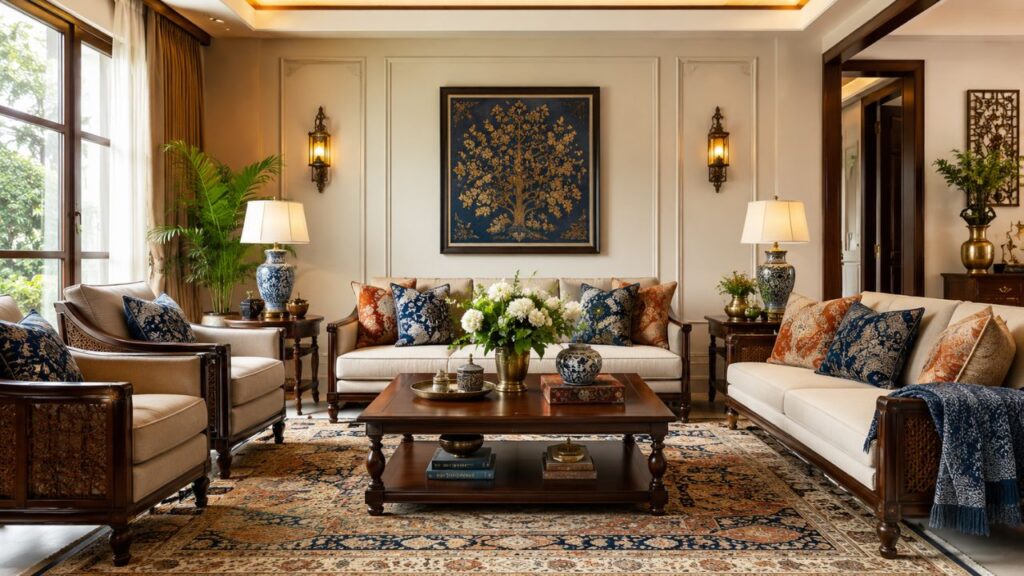
Let’s talk about sofas. In a classic living room ideas framework, the sofa serves as the anchor piece. You want rolled arms, turned legs, and a silhouette that looks substantial from across the room. But—and this matters—you also want to be able to nap on it. I made the mistake once of buying a gorgeous camelback sofa that was basically a torture device covered in damask. Never again.
The key to successful traditional living room decor is balancing form with comfort. A Chesterfield sofa in worn leather brings instant gravitas but still invites you to curl up with a book. Paired with a couple of modern armchairs in a geometric print, you avoid the stuffy museum vibe while keeping the traditional soul intact.
Coffee tables deserve more attention than they get. In many room photo examples I’ve studied, the coffee table serves as the visual center of the seating group. A large upholstered ottoman with a tray creates flexibility. A substantial wood piece with turned legs reinforces the traditional mood. Either works, but scale matters enormously. Too small, and the whole arrangement feels apologetic.
Side tables and consoles offer opportunities to layer in personality. I’m partial to pieces with some age on them. You can find stunning mahogany side tables at estate sales for less than what particle board costs new. These older pieces bring a depth to a traditional classic living room that brand-new furniture simply cannot replicate. The small scratches and patina tell you this piece has lived a life before joining your home.
The Magic Is in the Mix: Patterns, Textures, and Layers
Here’s something most living room ideas articles gloss over. Traditional rooms thrive on pattern mixing, but there’s an art to getting it right. The trick is varying the scale. A large floral print on the drapery, a medium-scale stripe on the armchair, and a small geometric on the throw pillow. Three different patterns, three different scales, one cohesive look.
Texture matters just as much. When I’m pulling together cozy traditional living room decor schemes for friends, I think about touch points. The velvet cushion, the nubby wool throw, the smooth leather ottoman, the slightly rough sisal rug. These tactile contrasts make a room feel layered and complete. Without them, even expensive furniture can feel flat and one-dimensional.
One of my favorite elegant traditional living room ideas involves mixing metals thoughtfully. Brass picture lights above artwork. Bronze table lamps with silk shades. Perhaps a silver tray on the ottoman catching the light. The metals don’t need to match perfectly. They just need to relate to each other through finish—all warm, or all with a bit of age and patina.
Creating That Warm, Collected Feeling
The phrase warm traditional living room gets thrown around a lot in design circles, but what does it actually mean? To me, it means a room where the lighting flatters, the seating encourages lingering, and the overall atmosphere feels like a gentle exhale after a long day.
Achieving this starts with light sources at multiple heights. Overhead fixtures on dimmers. Table lamps at eye level when seated. Perhaps a floor lamp in a dark corner. The goal is pools of light that create intimacy rather than one harsh overhead that makes everything look flat. I’ve seen room design photo examples where the lighting alone transformed a cold space into something magnetic.
Color temperature plays a role too. Warm whites and creams on walls reflect light differently than stark whites. They make skin look healthier and rooms feel more enveloping. Benjamin Moore’s White Dove and Farrow & Ball’s School House White are popular for exactly this reason. They shift a living room background from sterile to soft without reading yellow or beige.
Books are an underrated tool for warmth. Shelves filled with actual books—not just decorative objects—signal that this room hosts real life. They absorb sound, add color, and invite browsing. In a traditional living room, built-in bookcases painted the same color as the trim work create architecture while housing your collection.
The Modern Traditional Living Room: Old Soul, Fresh Eyes
The idea of a modern traditional living room would have seemed contradictory twenty years ago. Now it’s probably the most livable version of traditional style available. The approach keeps the symmetry, quality, and warmth of traditional design while shedding the formality and clutter.
In practice, this might look like a classic roll-arm sofa covered in a contemporary charcoal linen rather than floral chintz. Traditional wingback chairs reupholstered in a bold modern print. A sleek metal floor lamp next to a mahogany side table. The juxtapositions keep the eye moving and prevent the room from feeling like a period reproduction.
Art choices make a huge difference here. I’ve seen traditional living room inspiration photos where a massive abstract canvas hangs above a traditional mantel, and the effect is electric. The classic architecture provides order while the contemporary art injects personality and edge. Similarly, photography and mixed-media pieces feel fresh against traditional moldings.
Rugs offer another opportunity to modernize. Instead of a formal Oriental pattern, try a Moroccan Beni Ourain with its simple geometric motifs. Or a Swedish flat-weave with its restrained stripes. These still feel appropriate in a traditional style living room but read as much more current than a traditional Persian design.
Common Mistakes That Undermine the Whole Look
After years of studying pictures of traditional living rooms and helping friends with their spaces, I’ve catalogued the errors that consistently sabotage good intentions.
The first is matchy-matchy furniture sets. Walking into a store and buying the sofa, loveseat, chair, and ottoman all in the same fabric from the same collection is the fastest route to a room with zero soul. A traditional living room decor scheme needs variety in finish, era, and silhouette to feel authentic.
The second mistake is neglecting scale. Petite furniture in a large room looks like dollhouse furnishings. Oversized pieces in a small room suffocate. Many living room images that look “off” have scale problems at their root. Measure your space. Map it out with painter’s tape before purchasing anything substantial.
Third is ignoring the vertical space. Art hung too high. Drapery rods mounted right at the window frame instead of closer to the ceiling. Empty walls looming over squat furniture. Good room design photo examples use the full height of the room. Drapery panels that brush the floor. Art at eye level. Tall bookcases or floor lamps that draw the gaze upward.
Fourth is poor lighting. I cannot overstate how important this is. A single overhead fixture with a sad boob light kills even the most beautiful traditional classic living room. Layer your light sources and put everything on dimmers.
How I Approach a Room Refresh Without Starting Over
Not everyone has the budget or desire to gut their living room and start fresh. Most of us work with what we have and improve incrementally. Some of my favorite home decor ideas cost very little and can be accomplished in a weekend.
Paint is the obvious first move. A new wall color transforms perception more than almost anything else. But don’t stop at the walls. Painting ceiling trim, refreshing baseboards, or color-drenching the room in a single warm shade can make a traditional room feel custom and considered.
Swapping out lampshades is another quick win. Those cheap white shades that come with most lamps flatten the light and look inexpensive. A pleated silk shade in cream or a dark paper shade with gold lining changes how light moves through the room. It’s a small detail that signals quality in any living room interior design plan.
Throw pillows get mocked as basic, but they genuinely shift the mood. In a cozy traditional living room decor setup, pillows in rich textures—velvet, mohair, embroidered linen—add comfort and color. Buy inserts one size larger than the cover for that plump, luxurious look. It’s a cheap trick that photographs beautifully in any room photo.
Rearranging furniture costs nothing and sometimes solves problems you didn’t know you had. Pull seating away from the walls. Float the sofa in the room with a console table behind it. Angle chairs toward each other to encourage conversation. Many living room ideas fail because the layout fights against how humans actually want to interact.
Finding Your Own Version of Traditional
The most compelling traditional living room spaces reflect the people who inhabit them. They’re not slavish copies of a design era. They incorporate travel souvenirs, family photographs, inherited pieces, and oddball finds that speak to personal history.
I think that’s what I was really responding to in my grandmother’s house all those years ago. It wasn’t the specific furniture or the color of the walls. It was the sense that this room had accumulated meaning over decades. The crack in the china teacup. The worn spot on the rug where the dog always slept. The books with yellowed pages and inscriptions in the front covers.
Those elements can’t be purchased from a catalog. They arrive through living. But you can create the conditions for them. Start with quality foundational pieces. Layer in texture and pattern over time. Prioritize comfort and warmth. Let the room evolve rather than demanding it arrive fully formed.
Some of my favorite elegant traditional living room ideas come from homes that have been lived in for decades. The walls might show slight wear. The upholstery might be gently faded. But the overall effect is of a space that has hosted countless conversations, holiday gatherings, quiet mornings with coffee, and lazy Sunday afternoons.
That’s the kind of living room inspiration worth pursuing. Not a picture-perfect room that photographs well but feels cold. A room that wraps around you when you walk in and makes you want to stay awhile.
Quick Design Tips I’ve Stolen From Professionals
Over years of reading, observing, and occasionally hiring people who actually know what they’re doing, I’ve collected actionable advice that works across almost any traditional living room setting.
Hang drapery rods 4-6 inches above the window frame, or halfway between the frame and ceiling if you have tall ceilings. Extend the rod 8-12 inches beyond each side of the window so the panels stack back on the wall rather than blocking glass. This single move makes windows look significantly larger in any living room images you’ll take.
Use the rule of thirds on mantels and shelves. Group objects in odd numbers with varying heights. A tall vase, a medium stack of books, and a small decorative object create a more pleasing composition than items lined up like soldiers.
Area rugs should be large enough that at least the front legs of all seating pieces sit on them. A rug that floats in the middle of the room like a postage stamp undermines the cohesion of a traditional living room decor arrangement.
Art should hang with its center at roughly 57-60 inches from the floor, which is average eye level. Over a sofa, the bottom of the frame should sit 6-8 inches above the back cushions. These proportions appear in countless room design photo examples because they consistently work.
When to Break the Rules
Everything I’ve outlined represents guidelines, not laws. The most memorable rooms I’ve encountered broke conventions in interesting ways. A modern traditional living room might skip symmetry entirely in favor of a more casual, collected arrangement. An elegant traditional living room ideas approach might embrace formality with matching sofas facing each other across a central table.
The point is knowing the rules before you break them. Understanding why symmetry pleases the eye lets you disrupt it intentionally rather than accidentally. Knowing the traditional color palette gives you a baseline from which to depart.
Trust your instincts. If a piece makes you happy, find a place for it. The best home decor ideas spring from personal connection rather than rigid adherence to a style manual. Your living room should feel like yours, not like a page from a catalog.
Frequently Asked Questions
What defines a traditional living room style?
A traditional living room emphasizes symmetry, classic furniture silhouettes like rolled arms and turned legs, warm wood tones, and layered textiles. The style draws from 18th and 19th century European design but adapts these elements for modern comfort. You’ll typically find substantial sofas, area rugs with classic patterns, and balanced arrangements of furniture and accessories.
How do I make a traditional living room feel current?
Mix in contemporary elements like abstract art, modern lighting fixtures, or furniture with cleaner lines. A modern traditional living room works because the contrast creates energy. Swap heavy drapery for linen panels, incorporate a few metallic accents, and keep accessories edited rather than abundant.
What are the best colors for a warm traditional living room?
Warm neutrals form the foundation—think ivory, cream, warm gray, and soft beige. Layer in deeper tones like burgundy, navy, forest green, or cognac through upholstery and accessories. The key is warmth in the undertones rather than cool, stark shades.
How can I get a traditional look on a budget?
Shop estate sales, consignment stores, and online marketplaces for solid wood furniture with good bones. Paint walls a warm neutral. Invest in quality lampshades and substantial drapery hardware. Build the room slowly over time rather than buying everything at once.
What’s the difference between traditional and transitional style?
Traditional style adheres more closely to classic furniture forms and symmetrical layouts. Transitional blends traditional and contemporary elements more evenly, often with simpler furniture profiles and fewer ornate details. A traditional classic living room feels rooted in history, while transitional rooms feel more ambiguous.
Can I mix traditional and modern furniture?
Absolutely. Some of the best living room decor ideas come from this mix. A sleek modern sofa can look stunning with an antique Persian rug and traditional side tables. The contrast makes both styles more interesting than either would be alone.