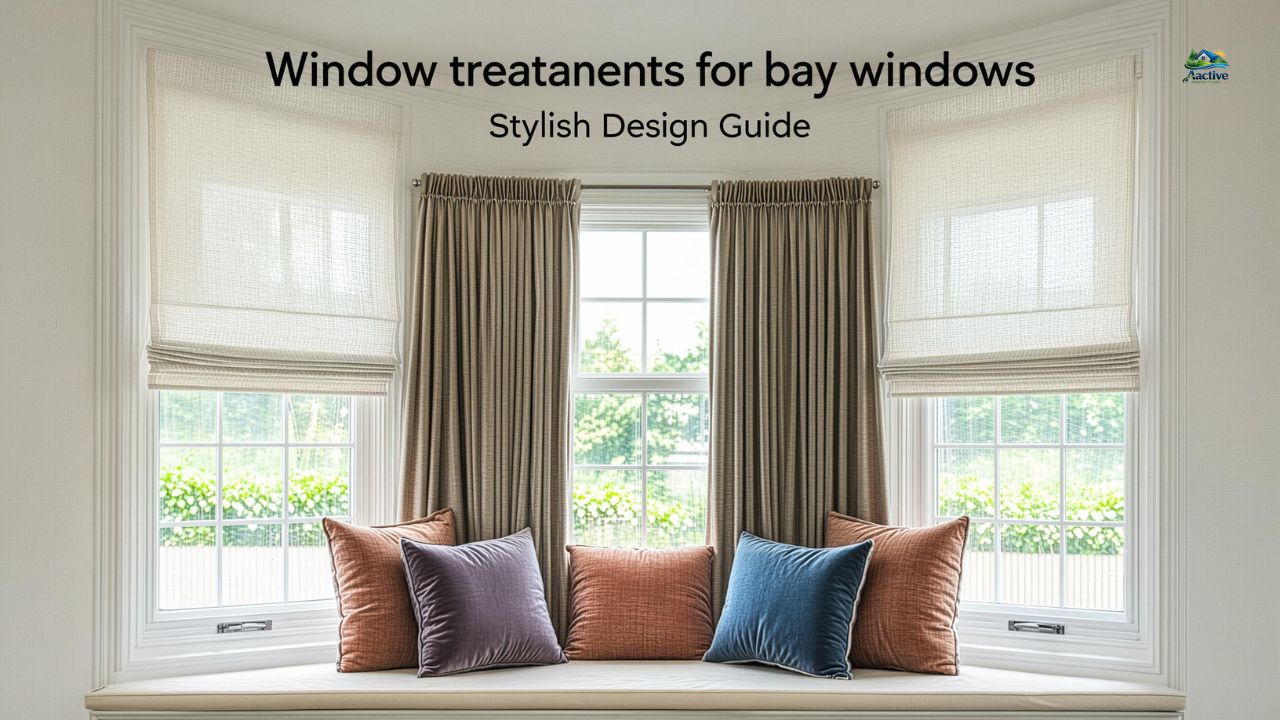
Bay windows have a way of stealing the room—in the best possible way. They pull in light, create charm, and give a home that cozy little architectural moment people remember. But choosing window treatments for bay windows can feel surprisingly tricky because every angle, frame, seat, and sightline matters.
The right solution does more than cover glass. It controls glare, protects privacy, softens hard edges, improves comfort, and makes the whole room feel finished. In other words, bay window coverings are not just decorative extras; they shape how the space feels every morning, afternoon, and evening.
And yes, there is a practical side too. The U.S. Department of Energy says about 30% of a home’s heating energy is lost through windows, while roughly 76% of sunlight that falls on standard double-pane windows enters as heat during cooling seasons. That means thoughtful shades, curtains, blinds, shutters, and draperies can influence comfort as well as style.
Bay windows deserve special attention because they are rarely simple rectangles on a flat wall. They project outward, catch light from multiple directions, and often become the emotional center of a living room, dining nook, bedroom, or breakfast area. Get the treatment right, and the window becomes a feature. Get it wrong, and it can feel awkward, bulky, or unfinished.
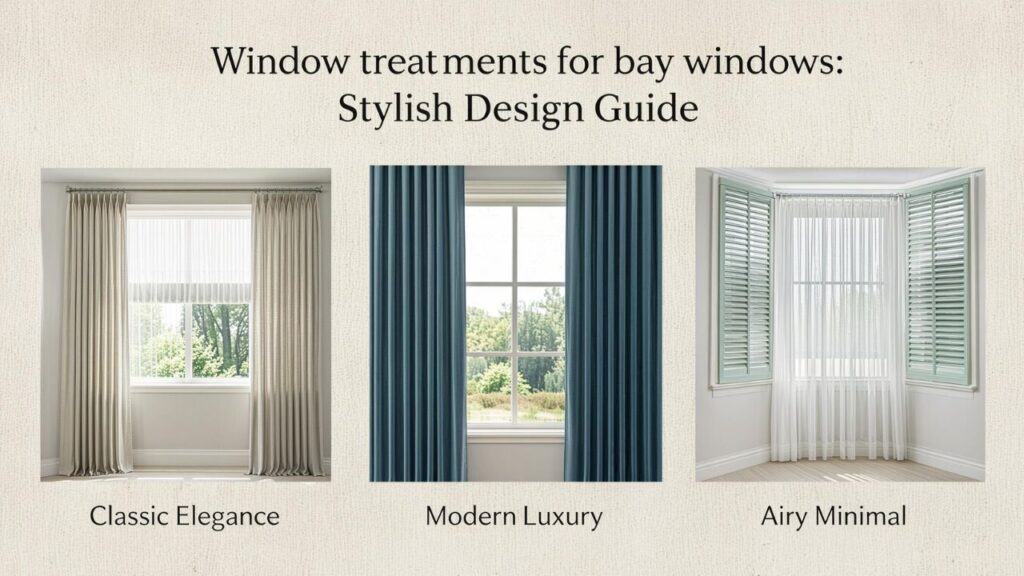
Table of Contents
- What Makes Bay Windows Different
- Why Good Window Coverings Matter
- Best Styles and Options
- How to Choose the Right Look
- Measuring, Mounting, and Hardware Planning
- Light Control, Privacy, and Energy Efficiency
- Safety, Maintenance, and Everyday Use
- Budget, Home Value, and Financial Considerations
- Common Mistakes to Avoid
- Room-by-Room Design Ideas
- FAQ
- Conclusion
What Makes Bay Windows Different
A bay window is a window arrangement that projects outward from the main wall, usually with one large center panel and two angled side panels. The side panels often sit at 30, 45, or 90 degrees, creating a small alcove, shelf, seating area, or architectural bump-out.
That angled shape is exactly what makes window styling so interesting—and occasionally frustrating. A normal curtain rod may not fit cleanly. Standard blinds may leave gaps. Full drapes may crowd the seating area. Short shades may look too busy if every panel is treated separately without a clear plan.
In many homes, bay windows also serve multiple roles. They might frame a view, hold plants, create a reading nook, brighten a dining space, or make a living room feel larger. Because of that, the best treatment should support the purpose of the space, not fight it.
A formal dining room may need softness and elegance. A street-facing bedroom may need privacy. A sunny breakfast nook may need glare control. A family room may need cordless, durable, kid-friendly options. Same window shape, very different needs.
The main challenge is balance. You want to honor the architecture without hiding it. A beautiful bay window should still look like a bay window after the coverings are installed.
Why window treatments for bay windows Matter
Good window treatments for bay windows matter because bay windows expose more glass, more angles, and more light than a typical flat window. That can be wonderful on a mild morning and irritating during a hot afternoon when glare hits the sofa, TV, or dining table.
Privacy is another issue. Because bay windows project outward, people outside may see into the room from more than one angle. This is especially true in townhomes, older neighborhoods, front-facing living rooms, and homes near sidewalks.
Then there is comfort. Window coverings can help manage heat gain, drafts, and harsh sunlight. Operable coverings give homeowners flexibility: open them for natural light and winter sun, close them for privacy or summer heat control. The Department of Energy specifically notes that operable window coverings allow flexibility for privacy, daylight, winter solar heat, and summer heat reduction.
Style matters too. A bare bay window can look unfinished, like a sentence without punctuation. The right curtains, shades, shutters, or blinds can make the room feel softer, taller, cozier, brighter, or more polished.
Here is the simple truth: a bay window naturally attracts attention. If it looks neglected, the whole room feels slightly off. If it is dressed well, the entire space feels more intentional.
Best window treatments for bay windows
The best window treatments for bay windows depend on the room, the view, the amount of light, and how much privacy you need. Still, a few options work especially well because they respect the angled shape.
Roman shades
Roman shades are one of the most popular choices because they look tailored without feeling stiff. Each window panel gets its own shade, which allows you to control light separately. That is helpful when one side gets direct sun and another side stays shaded.
Flat Roman shades feel clean and modern. Relaxed Roman shades feel softer and more romantic. Patterned fabric can turn the bay into a feature, while neutral linen can keep the look calm.
Roman shades work beautifully in bedrooms, dining rooms, home offices, and formal living rooms. They are especially strong when you want softness but do not have room for full-length drapery.
Cellular shades
Cellular shades, also called honeycomb shades, are practical, neat, and energy-conscious. Their structured pockets trap air, which can help reduce heat transfer. A U.S. Department of Energy fact sheet reported that cellular shades saved up to 20% on heating energy and up to 15% on total heating and cooling energy compared with having no shades in modeled scenarios.
They are a smart choice for sunny bay windows, drafty older homes, bedrooms, nurseries, and rooms where comfort matters as much as appearance. Top-down bottom-up versions are especially useful because they let light in from the top while keeping privacy below.
Design-wise, cellular shades are quieter than dramatic drapes. They do not usually become the visual star, but they do their job very well.
Drapery panels
Drapes add softness, drama, and height. For bay windows, there are two common approaches: individual panels inside or around each window section, or one larger treatment across the outside of the bay.
Individual panels can look charming but may become crowded if the bay is small. A single outside-mounted drapery system can make the wall feel wider and more elegant, especially when the panels stack outside the window opening.
Drapes are ideal when you want warmth, texture, sound softening, or a more finished designer look. They also layer nicely over shades.
Wood or faux wood blinds
Blinds offer adjustable light control because the slats tilt. That makes them useful for living rooms, offices, and breakfast nooks where light changes throughout the day.
Wood blinds feel warmer and more natural. Faux wood blinds are often more moisture-resistant and practical in kitchens, bathrooms, or humid areas. However, blinds can look busy on a bay window if every panel has thick slats and heavy cords. Choose a clean finish and consider cordless operation where possible.
Shutters
Shutters are architectural, durable, and classic. They can look especially beautiful in traditional homes, coastal cottages, farmhouses, and older properties with detailed trim.
Because shutters are custom-fitted, they can follow the angles of the bay neatly. They also provide strong privacy and light control. The trade-off is that they can be more expensive and visually heavier than fabric shades.
For bay windows with seating, café-style shutters can be charming. They cover the lower half for privacy while leaving the upper glass open to daylight.
Roller shades
Roller shades are clean, simple, and modern. They work well when you want the window treatment to disappear visually. Solar roller shades reduce glare while preserving some view, which can be useful in bright living rooms or home offices.
Blackout roller shades are practical for bedrooms, but they can feel plain unless layered with curtains or a decorative valance.
Woven wood shades
Woven wood shades bring texture and warmth. Made from materials such as bamboo, grasses, reeds, or natural fibers, they suit organic, coastal, bohemian, farmhouse, and relaxed modern interiors.
They filter light beautifully, but privacy levels vary. Many homeowners add a privacy or blackout liner, especially for bedrooms or street-facing rooms
How to Choose window treatments for bay windows
Choosing window treatments for bay windows becomes much easier when you stop asking, “What looks pretty?” and start asking, “What does this window need to do?”
A living room bay facing a private backyard may only need light filtering and softness. A bedroom bay facing the street may need blackout lining and strong privacy. A kitchen bay above a breakfast table may need easy-clean materials and a treatment that does not collect cooking residue.
Start with the room’s main problem
Every window has a problem to solve. Sometimes it is glare. Sometimes it is privacy. Sometimes it is heat. Sometimes it is simply that the room feels unfinished.
Common goals include:
- Reducing afternoon glare
- Blocking views from outside
- Making the room feel warmer
- Adding softness to hard architecture
- Protecting furniture from sun fading
- Creating a cozy reading nook
- Improving sleep in a bedroom
- Making the window look taller or wider
- Hiding awkward trim or uneven proportions
Match the treatment to the mood
The treatment should fit the personality of the room. Heavy velvet drapes may feel wonderful in a moody library but too formal in a sunny breakfast nook. Minimal roller shades may feel perfect in a modern condo but too plain in a traditional sitting room.
A helpful design rule is this: the more architectural detail the bay already has, the simpler the treatment can be. If the window has beautiful trim, deep casing, or a charming seat, do not smother it. Let the shape breathe.
Decide whether to layer
Layering means using two treatments together, such as Roman shades plus curtains, cellular shades plus side panels, or shutters plus a decorative valance.
Layering gives you flexibility. The inner treatment handles privacy and light control. The outer treatment adds softness, height, color, or pattern.
A layered bay window often feels more custom, but it also needs careful proportions. Too many layers can make a small bay feel crowded.
Measuring, Mounting, and Hardware Planning
Bay windows punish guesswork. A half-inch mistake can create gaps, crooked lines, or awkward hardware conflicts. Before ordering anything, measure each window separately. Do not assume all panels are the same size.
Measure width, height, depth, frame thickness, sill projection, handle placement, crank location, molding depth, and the angle between panels. Also check whether the windows open inward, outward, or slide. A treatment that blocks a handle will annoy you every day.
There are three main mounting approaches.
Inside mount
Inside-mounted shades or blinds fit within each window frame. This look is clean and architectural because it preserves the shape of the bay.
Inside mount works best when the window frame has enough depth. It is excellent for Roman shades, cellular shades, roller shades, blinds, and shutters.
Outside mount
Outside-mounted treatments attach above or outside the frame. They can hide imperfect trim, make windows look larger, and reduce light gaps.
For bay windows, outside mounting can be tricky because angled walls limit hardware space. It works best when there is enough flat surface above each window or when using a custom bay window rod.
Ceiling mount
Ceiling-mounted drapery can make a bay window feel taller and more luxurious. It is often used when the window trim is shallow or when you want full-height fabric.
A ceiling track can follow the bay’s angles more gracefully than a standard rod. This approach is especially useful for contemporary spaces or large bay windows.
Hardware choices
| Hardware type | Best use | Design note |
|---|---|---|
| Custom bay rod | Drapes around angled windows | Great for traditional or layered rooms |
| Ceiling track | Smooth curtain movement | Clean and modern |
| Individual brackets | Separate shades or blinds | Simple and flexible |
| Tension rods | Lightweight café curtains | Best for casual spaces |
| Shutter frames | Custom fitted panels | Architectural and permanent |
| Motorized system | Tall or hard-to-reach bays | Convenient but higher cost |
If you are ordering custom products, professional measuring is often worth it. It is not glamorous, but it can prevent expensive reorders.
Light Control, Privacy, and Energy Efficiency
Bay windows are beautiful because they collect light from more than one direction. That same feature can create hot spots, screen glare, faded fabrics, and uneven brightness.
For soft daylight, choose light-filtering Roman shades, sheer curtains, woven shades with liners, or solar shades. For strong privacy, choose lined Roman shades, shutters, blackout cellular shades, or layered drapery. For bedrooms, blackout liners are usually worth considering.
Energy efficiency depends on window quality, climate, orientation, and how consistently the coverings are used. The Department of Energy notes that window attachments include shades, blinds, screens, awnings, draperies, curtains, and shutters, and that they can play a role in managing energy use in both new and existing homes.
Here is a practical comparison:
| Goal | Strong options | Why they work |
|---|---|---|
| Maximum privacy | Shutters, blackout shades, lined Romans | Block views clearly |
| Soft filtered light | Linen Romans, sheer curtains, woven shades | Reduce harshness without darkness |
| Better insulation | Cellular shades, layered drapery | Add air-trapping or fabric layers |
| Glare reduction | Solar shades, blinds, shutters | Allow adjustable light control |
| Decorative softness | Drapes, relaxed Romans, café curtains | Add fabric and movement |
| Clean modern style | Roller shades, flat Romans, shutters | Keep lines simple |
| Child-friendly design | Cordless shades, shutters, motorized options | Reduce cord hazards |
Remember that operation matters. The best shade is the one you will actually open and close. If a treatment is difficult to use, it will stay in one position forever.
Safety, Maintenance, and Everyday Use
Safety should be part of design from the beginning, especially in homes with young children or visiting grandchildren. The U.S. Consumer Product Safety Commission says the safest option when young children are present is cordless window coverings and encourages consumers to buy and install cordless products.
The CPSC has also addressed hazardous cords in custom coverings, stating that accessible operating cords longer than 8 inches on custom window coverings pose an unreasonable strangulation risk to children 8 years old and younger.
That may sound serious for a design article, but it matters. A beautiful room should never quietly introduce avoidable hazards.
For everyday use, think about cleaning. Bay windows collect dust, especially on sills and ledges. Fabric shades may need vacuuming with a brush attachment. Wood blinds need regular dusting. Shutters are durable but still collect dust on louvers. Kitchen bay windows may need wipeable materials because grease and moisture travel farther than people expect.
Pets matter too. Cats love bay windows. Dogs may press noses against lower glass. Toddlers may pull fabric. If the window sits near daily activity, choose treatments that can handle real life, not just a photoshoot.
Motorized options can be helpful for tall bays, hard-to-reach shades, or households that want scheduled light control. They cost more, but they can make coverings easier to use consistently.
Budget, Home Value, and Financial Considerations
There is no personal background or net worth angle for this topic because it is not about a public figure. The financial question is more practical: how much should you invest, and where does the money matter most?
Bay windows often cost more to dress than standard windows because they involve multiple panels, custom measurements, angled hardware, or layered treatments. A single flat window might need one shade. A bay may need three, four, or even five separate pieces.
Budget ranges vary widely by product type, fabric, size, customization, lining, motorization, and installation. Stock curtains are usually the least expensive. Custom shutters, motorized shades, and layered designer treatments sit higher on the scale.
A rough planning table:
| Treatment type | Budget level | Best value when |
|---|---|---|
| Ready-made curtains | Lower | The bay is simple and standard-size |
| Roller shades | Lower to mid | You want clean function |
| Faux wood blinds | Lower to mid | Durability matters |
| Cellular shades | Mid | Comfort and insulation matter |
| Roman shades | Mid to high | You want tailored softness |
| Woven wood shades | Mid to high | Texture is important |
| Shutters | High | You want architectural permanence |
| Motorized custom shades | High | Convenience and access matter |
If resale is part of your thinking, choose timeless treatments in main rooms. Neutral Romans, shutters, quality drapery, and simple cellular shades tend to age better than loud prints or overly trendy hardware. However, your daily comfort should still come first. You are the one living with the sunlight, privacy, and morning routine.
Spending more makes sense when the bay window is a major focal point, faces the street, causes glare, or affects temperature comfort. Spending less can make sense in a casual room, rental property, or temporary decorating phase.
Common Mistakes to Avoid
The first mistake is treating the bay like a regular flat window. It is not. The angles change everything: fabric stack, rod placement, shade gaps, hardware clearance, and how light enters the room.
The second mistake is choosing beauty over function. A sheer curtain may look dreamy, but it will not help much if your neighbor can see straight into your bedroom at night.
The third mistake is ignoring window handles. Casement cranks, locks, deep sills, and trim details can interfere with shades or blinds. Always test how the window opens before choosing a product.
The fourth mistake is going too heavy. Thick drapes, bulky rods, and oversized valances can swallow a small bay window. The goal is to enhance the architecture, not bury it.
The fifth mistake is skipping lining. Unlined fabric can fade, look thin at night, or fail to block enough light. Lining often makes fabric hang better and last longer.
The sixth mistake is forgetting the outside view. Window coverings affect curb appeal too, especially on front-facing bays. From the street, mismatched liners or uneven shades can look messy.
The seventh mistake is not considering cords. Cordless, motorized, or inaccessible-cord options are safer and usually cleaner-looking.
Room-by-Room Design Ideas
A living room bay window usually needs a mix of softness and control. If the bay frames a pretty view, use light-filtering shades or drapes that stack away from the glass. If the room has a TV, solar shades or adjustable blinds can reduce glare.
A dining room bay can handle more drama. Tailored Roman shades in a subtle pattern, full-length drapes, or café curtains can make meals feel warmer and more intimate. If the window sits behind a banquette, avoid treatments that drag on the seat.
A bedroom bay needs privacy first. Blackout Roman shades, blackout cellular shades, or layered curtains can help create a restful space. Top-down bottom-up shades are especially useful if the bedroom faces a street.
A kitchen bay window needs practical materials. Faux wood blinds, washable café curtains, roller shades, or shutters can work well. Avoid delicate fabrics near sinks or cooking areas unless they are easy to remove and clean.
A home office bay often needs glare control without losing daylight. Solar shades, cellular shades, or adjustable blinds can help protect screens while keeping the room bright.
A nursery or child’s room should prioritize cordless operation. Soft cellular shades, cordless Romans, shutters, or motorized treatments can create a peaceful look without accessible cords.
FAQ
What are the best window treatments for bay windows?
The best option depends on your needs, but Roman shades, cellular shades, shutters, woven wood shades, blinds, roller shades, and layered drapery are all strong choices. For a polished look, many homeowners use individual shades on each panel with optional curtains outside the bay.
Can you put curtains on a bay window?
Yes, curtains can look beautiful on a bay window. You can use a custom bay rod, ceiling-mounted track, or outside-mounted panels. The best method depends on the bay’s depth, angles, trim, and whether you want the curtains to close fully or frame the window decoratively.
Should bay window shades be inside mount or outside mount?
Inside mount usually looks cleaner because it follows each window panel and preserves the bay shape. Outside mount works better when the frame is shallow, the trim is uneven, or you want to reduce light gaps.
Are shutters good for bay windows?
Shutters are excellent for bay windows when you want a custom, architectural, long-lasting solution. They provide privacy, light control, and a polished look, though they are usually more expensive than basic shades or blinds.
How do I get privacy without losing natural light?
Top-down bottom-up cellular shades, café shutters, sheer layered curtains, solar shades, and light-filtering Roman shades can help. The idea is to block lower sightlines while still letting daylight enter from above.
What is the most energy-efficient option for bay windows?
Cellular shades are one of the strongest interior options because their honeycomb structure traps air. Layered drapery can also help, especially when paired with properly fitted shades.
Do bay windows need custom window treatments?
Not always, but custom is often helpful because bay windows have angles, separate panels, and unique measurements. Ready-made curtains may work for simple decorative framing, but shades, shutters, and fitted blinds usually require more precision.
Are cordless shades worth it?
Yes, especially in homes with children or pets. Cordless shades look cleaner, are easier to operate in many rooms, and reduce the hazards associated with accessible cords.
How do I make a small bay window look bigger?
Mount curtains higher, use slim hardware, choose light fabrics, avoid bulky valances, and keep the center glass as open as possible. Simple shades in a color close to the wall can also make the bay feel larger.
Conclusion
Bay windows are charming because they feel a little special. They catch the light differently, create cozy corners, and give a room architectural personality that flat windows often lack.
The right window treatments for bay windows should respect that charm while solving real-life problems like privacy, glare, heat, fading, safety, and daily convenience. Sometimes that means crisp cellular shades. Sometimes it means tailored Roman shades. Sometimes it means graceful drapery, shutters, woven textures, or a layered combination that feels quietly custom.
Start with the room’s needs, measure carefully, choose safe operating systems, and let the architecture breathe. When the treatment supports both beauty and function, your bay window stops feeling tricky and starts becoming exactly what it should be: one of the most loved spots in the home.