Article
Decorating a room can feel exciting at first, then quickly become overwhelming. You may have a sofa you love but no idea what rug goes with it. You may have blank walls, mismatched furniture, harsh lighting, or a room that looks “almost there” but never quite finished.
The good news is that learning how to decorate a room does not require a huge budget, a design degree, or starting from scratch. A beautiful room is usually built through thoughtful choices: the right layout, a clear color palette, practical furniture, layered lighting, texture, and personal details that make the space feel like yours.
This guide walks you through the process step by step, whether you are decorating a bedroom, living room, guest room, home office, dining room, or small apartment space. You will learn how to plan your room, avoid common decorating mistakes, make smart budget decisions, and create a space that feels comfortable, balanced, and intentional.
Start With the Purpose of the Room
Before choosing paint, furniture, art, or accessories, decide what the room needs to do. A room that looks nice but does not work for daily life will eventually frustrate you.
Ask yourself how the room will be used most often. Is it a place to relax, sleep, entertain, work, study, watch TV, read, host guests, or store everyday items? A living room for a family with kids and pets needs different decorating decisions than a formal sitting room. A bedroom used only for rest may need a calmer approach than a bedroom that also functions as a home office.
A clear purpose helps guide every design choice. It affects furniture size, layout, storage, lighting, fabrics, colors, and even the type of decor you choose.
For example:
- A cozy reading room needs comfortable seating, warm lighting, side tables, and soft textures.
- A small bedroom needs smart storage, calm colors, and furniture that does not crowd the space.
- A family room needs durable fabrics, easy-to-clean surfaces, and flexible seating.
- A home office needs task lighting, a supportive chair, cable management, and fewer visual distractions.
When in doubt, function comes first. Style works best when it supports real life.
Measure the Room Before You Buy Anything
One of the most common decorating mistakes is buying furniture or decor before measuring. A sofa that looks perfect online may overwhelm a small living room. A rug that seems large in a store may look tiny once it is placed under a bed or coffee table.
Measure the room carefully, including:
- Room length and width
- Ceiling height
- Doorways and entry points
- Window placement
- Fireplace, built-in shelves, or architectural features
- Wall space for furniture and art
- Electrical outlets
- Clearance around doors, drawers, and walkways
Keep these measurements in your phone so you have them when shopping. This simple step can save money, time, and returns.
As a general rule, leave comfortable walking space around furniture. In many rooms, 30 to 36 inches is ideal for main walkways. In tighter rooms, you may be able to work with less, but the room should still feel easy to move through.
Measuring also helps with scale. A large room can handle bigger furniture, oversized art, tall plants, and wider rugs. A compact room often looks better with slimmer profiles, lighter visual weight, and fewer oversized pieces.
Choose a Decorating Direction
A room feels more cohesive when it has a clear direction. That does not mean every piece needs to match. In fact, rooms often look better when they combine old and new, soft and structured, simple and detailed. But you do need a general mood.
Think about how you want the room to feel. Calm? Cozy? Bright? Minimal? Traditional? Modern? Warm? Airy? Elegant? Casual? Family-friendly?
A few popular decorating directions include:
| Style Direction | What It Feels Like | Common Elements |
|---|---|---|
| Modern | Clean, simple, uncluttered | Sleek furniture, neutral colors, minimal decor |
| Traditional | Classic, layered, polished | Wood furniture, symmetry, framed art, rich textures |
| Transitional | Balanced, timeless, flexible | Mix of modern and classic pieces |
| Farmhouse | Warm, relaxed, rustic | Natural wood, soft whites, woven textures |
| Bohemian | Collected, artistic, casual | Pattern, plants, layered textiles, vintage pieces |
| Coastal | Light, airy, relaxed | Blues, whites, natural fibers, breezy fabrics |
| Scandinavian | Simple, cozy, functional | Light wood, clean lines, soft neutrals |
| Eclectic | Personal, mixed, expressive | Curated contrast, art, color, unique finds |
You do not have to follow one style exactly. Many of the best rooms are a thoughtful blend. The goal is simply to create a consistent feeling so the room does not look random.
A helpful trick is to choose three words to describe the finished space, such as “warm, calm, natural” or “bold, modern, playful.” Use those words as a filter when making decisions.
Build a Color Palette That Feels Intentional
A strong color palette is one of the easiest ways to make a room feel pulled together. You do not need complicated color theory, but you do need a plan.
Start with colors that already exist in the room. Look at flooring, countertops, tile, trim, furniture you are keeping, and natural light. These fixed elements should influence your palette.
A simple beginner-friendly formula is:
- One main color
- One or two supporting colors
- One accent color
- A few neutrals to balance everything
For example, a calm bedroom might use warm white walls, beige bedding, soft blue accents, natural wood furniture, and black metal lamps. A cozy living room might use cream walls, camel leather, olive green pillows, warm wood, and brass accents.
Use the 60-30-10 Rule
The 60-30-10 rule is a classic decorating guideline:
- 60% of the room is the dominant color
- 30% is a secondary color
- 10% is an accent color
This does not have to be exact. Think of it as a balance tool. The dominant color may appear on walls, a large rug, or big furniture. The secondary color may show up in curtains, chairs, bedding, or cabinets. The accent color can appear in pillows, art, vases, lamps, or decorative objects.
This approach helps prevent a room from feeling too busy or too flat.
Consider Warm vs. Cool Undertones
A room can look “off” when undertones clash. Warm colors have yellow, orange, red, or brown undertones. Cool colors have blue, green, gray, or violet undertones.
For example, a warm cream sofa may not look right against a cold blue-gray wall. A cool white wall may make warm beige carpet look dull. When choosing paint, fabrics, and rugs, compare samples in the actual room during different times of day.
Natural light changes everything. North-facing rooms often feel cooler, while south-facing rooms tend to feel warmer and brighter. Test before committing.
Create a Furniture Layout That Supports Flow
A good furniture layout makes a room feel comfortable before you even notice the decor. Poor layout, on the other hand, can make beautiful furniture feel awkward.
Start by identifying the room’s focal point. This could be a fireplace, bed, window, TV, built-in shelving, artwork, or a great view. Arrange the main furniture around that focal point.
In a living room, the sofa usually anchors the layout. In a bedroom, the bed is usually the main feature. In a dining room, the table sets the structure. In a home office, the desk placement matters most.
Avoid Pushing Everything Against the Walls
Many people push every piece of furniture against the walls because they think it makes the room feel bigger. Sometimes it does, but often it creates an empty center and awkward conversation areas.
If space allows, pull seating slightly away from the walls. Even a few inches can make the room feel more intentional. In larger rooms, floating furniture can create cozy zones.
Think About Conversation and Comfort
For living rooms and family rooms, seating should make conversation easy. Chairs and sofas do not need to face each other perfectly, but they should feel connected. Avoid placing seats so far apart that people have to raise their voices.
A coffee table should usually be close enough to reach from the sofa. Around 14 to 18 inches between a sofa and coffee table often works well, depending on the size of the room and the furniture.
Use Rugs to Define Zones
A rug can visually organize a room. In an open-concept space, rugs help separate the living area from the dining area or workspace. In a bedroom, a rug adds softness and anchors the bed.
The most common rug mistake is choosing one that is too small. In a living room, the front legs of the sofa and chairs should usually sit on the rug. In a bedroom, the rug should extend beyond the sides and foot of the bed so your feet land on something soft.
Choose Furniture With the Right Scale
Scale is about how furniture relates to the size of the room and to other pieces. A tiny coffee table in front of a large sectional may look lost. A bulky dresser in a small bedroom may make the space feel cramped.
When choosing furniture, consider both actual size and visual weight. A piece with thin legs may feel lighter than a solid block-style piece, even if the dimensions are similar. Glass, acrylic, cane, and open-base furniture can make a room feel less crowded.
For small rooms, look for:
- Sofas with narrow arms
- Beds with built-in storage
- Round tables that improve flow
- Wall-mounted shelves
- Nesting tables
- Ottomans with hidden storage
- Desks with slim profiles
For large rooms, avoid too many small pieces. Use larger rugs, substantial lighting, bigger art, and generous seating to match the scale of the space.
Layer Lighting Instead of Relying on One Fixture
Lighting can completely change how a room feels. A single overhead light often creates harsh shadows and a flat atmosphere. A well-decorated room usually has layered lighting.
There are three main types:
| Lighting Type | Purpose | Examples |
|---|---|---|
| Ambient lighting | General room illumination | Ceiling fixtures, recessed lights, flush mounts |
| Task lighting | Helps with specific activities | Desk lamps, reading lamps, under-cabinet lights |
| Accent lighting | Adds mood and highlights features | Picture lights, sconces, uplights, candles |
A bedroom might include a ceiling light, bedside lamps, and a small accent lamp on a dresser. A living room might include recessed lighting, a floor lamp by a chair, table lamps, and a picture light above art.
Bulb temperature matters too. Warm white bulbs, often around 2700K to 3000K, usually feel cozy in bedrooms and living rooms. Cooler bulbs may work better in garages, laundry rooms, or task-heavy spaces, but they can feel sterile in relaxing rooms.
Dimmer switches are also worth considering when possible. They allow one room to feel bright and functional during the day, then soft and relaxing at night.
Add Texture So the Room Does Not Feel Flat
A room can have beautiful colors and still feel boring if every surface looks the same. Texture adds depth, warmth, and visual interest.
Texture can come from:
- Woven baskets
- Linen curtains
- Velvet pillows
- Wool rugs
- Wood furniture
- Ceramic lamps
- Leather chairs
- Bouclé upholstery
- Metal accents
- Stone, marble, or concrete
- Plants and greenery
You do not need all of these. The goal is contrast. If your room has smooth painted walls and sleek furniture, add softness with curtains, pillows, throws, and rugs. If your room has lots of soft upholstery, add structure with wood, metal, or ceramic pieces.
Texture is especially important in neutral rooms. A beige room can look rich and layered when it includes linen, oak, wool, rattan, leather, and matte ceramics. Without texture, it may look unfinished.
Decorate the Walls With Intention
Blank walls can make a room feel incomplete, but filling every wall can make it feel cluttered. Good wall decor creates balance.
Options include:
- Framed art
- Family photos
- Mirrors
- Floating shelves
- Textile wall hangings
- Large-scale prints
- Gallery walls
- Wall sconces
- Decorative molding
- Wallpaper or peel-and-stick wallpaper
Choose the Right Art Size
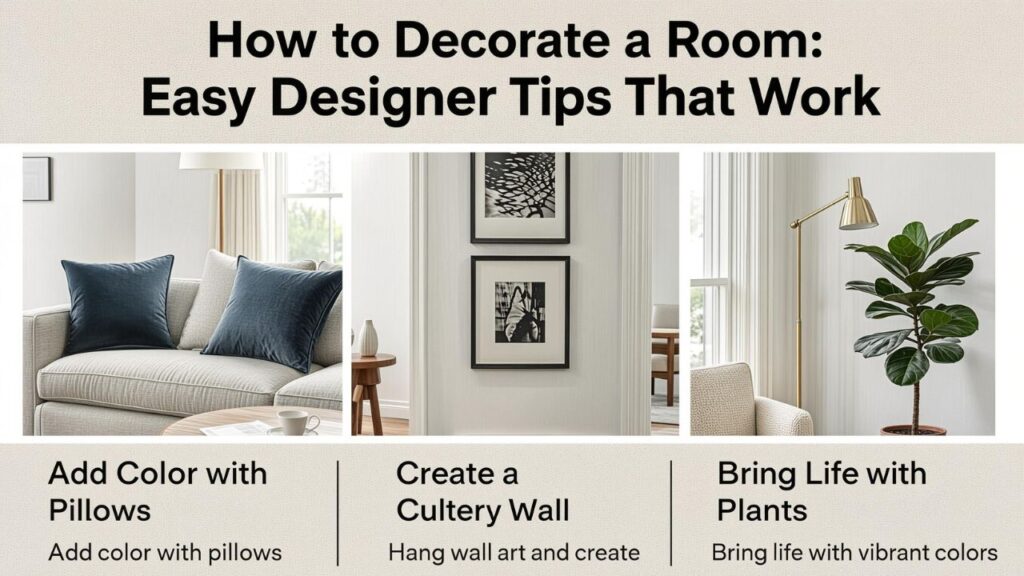
Art that is too small is a common issue. Above a sofa, bed, console, or dining table, artwork should usually be about two-thirds the width of the furniture below it. A single large piece often looks more polished than several small pieces scattered around.
Hang art at eye level when possible. A common guideline is to place the center of the artwork around 57 to 60 inches from the floor. Above furniture, leave enough breathing room so the art feels connected but not cramped.
Use Mirrors Carefully
Mirrors can make a room feel brighter and larger, especially when they reflect natural light or a beautiful view. Avoid placing mirrors where they reflect clutter, blank corners, or harsh lighting.
In small rooms, a large mirror can be more effective than several small mirrors. It creates a cleaner look and expands the sense of space.
Bring in Soft Furnishings
Soft furnishings make a room feel livable. They include curtains, pillows, throws, bedding, cushions, and upholstered pieces. These items can change the mood of a room without requiring major renovations.
Curtains are especially powerful. Hanging curtains higher and wider than the window can make ceilings feel taller and windows look larger. In many rooms, curtain rods look best placed several inches above the window frame and extended beyond the sides so the panels do not block too much natural light.
Pillows and throws are easy ways to introduce color, pattern, and texture. For a polished look, vary pillow sizes and fabrics. A sofa might include two larger pillows, two medium pillows, and one smaller accent pillow. A bed might include sleeping pillows, euro shams, and a lumbar pillow.
Do not overdo it. Too many pillows can make a room look staged and become annoying in daily life. Choose enough to add comfort and style without creating clutter.
Use Pattern Without Making the Room Feel Busy
Pattern can make a room feel lively and personal. The key is balance.
You can use pattern in:
- Rugs
- Pillows
- Curtains
- Wallpaper
- Bedding
- Upholstery
- Art
- Lampshades
A simple way to mix patterns is to vary the scale. Pair a large floral with a small stripe, or a bold geometric rug with subtle textured pillows. Keep the colors connected so the patterns feel related.
For beginners, start with one patterned piece, such as a rug or curtains, then pull colors from it for smaller accents. This creates a cohesive look without guessing.
If you prefer a calm room, choose tone-on-tone patterns, subtle stripes, small checks, or textured solids. Pattern does not have to be loud.
Add Storage That Looks Good and Works Hard
Clutter can ruin the feel of a room, even when the decor is beautiful. Good storage helps keep the space functional.
Look for storage that fits the room’s purpose. A living room may need baskets for blankets, closed cabinets for games, and media storage for electronics. A bedroom may need nightstands with drawers, under-bed storage, or a dresser with divided organizers. A home office may need shelves, file storage, and cable solutions.
Stylish storage options include:
- Woven baskets
- Storage ottomans
- Closed cabinets
- Built-in shelves
- Bookcases with bins
- Decorative boxes
- Benches with hidden compartments
- Wall hooks
- Floating shelves
Open storage works best for items you want to display. Closed storage is better for things that are useful but not attractive. Most rooms need both.
Make the Room Feel Personal
A room should not look like a showroom. Personal details give it warmth, story, and character.
Add items that reflect your life and taste:
- Books you actually read
- Travel keepsakes
- Family photos
- Vintage finds
- Handmade ceramics
- Art from local artists
- Meaningful objects
- Plants you enjoy caring for
- A favorite blanket or textile
The key is editing. Display fewer meaningful pieces instead of filling every surface. A room feels more refined when personal items have breathing room.
One helpful approach is to group decor in small arrangements. For example, place a lamp, a framed photo, and a small bowl on a console table. On a shelf, mix books, a plant, and one sculptural object. Grouping items in odd numbers, such as three or five, often feels natural.
Decorate on a Budget Without Looking Cheap
You do not need to spend thousands of dollars to create a beautiful room. Budget decorating works best when you prioritize high-impact changes.
Start with what makes the biggest difference:
- Rearranging furniture
- Decluttering
- Painting walls or trim
- Updating lighting
- Adding a larger rug
- Hanging curtains properly
- Replacing worn pillows
- Adding art
- Styling shelves
- Swapping hardware
- Bringing in plants
Paint is often one of the most cost-effective upgrades. A fresh wall color, painted dresser, or updated fireplace surround can dramatically change the room.
Secondhand shopping can also be a smart strategy. Thrift stores, estate sales, online marketplaces, and vintage shops often have solid wood furniture, frames, lamps, mirrors, and decorative pieces for less than new retail prices. Inspect items carefully for damage, odors, stability, and repair needs.
Spend more where quality matters most, such as a mattress, sofa, desk chair, or rug in a high-traffic area. Save on accessories that are easy to replace, such as pillows, vases, frames, and seasonal decor.
Room-by-Room Decorating Tips
Different rooms have different needs. The same design principles apply, but the priorities change.
Living Room
A living room should feel welcoming and comfortable. Start with seating, then add a rug, coffee table, lighting, and storage.
Focus on:
- Comfortable conversation areas
- A rug large enough to anchor the seating
- Side tables within reach
- Layered lighting
- Durable fabrics if the room gets heavy use
- A balanced mix of open and closed storage
Avoid choosing a coffee table that is too small or placing all lighting on the ceiling. Lamps make a living room feel warmer and more relaxed.
Bedroom
A bedroom should support rest. Even if you love bold design, the room should feel calm enough for sleep.
Focus on:
- A comfortable bed and mattress
- Soft bedding
- Bedside lighting
- Nightstands with storage
- Window treatments that provide privacy
- A calming color palette
- Minimal clutter
The bed is usually the focal point. A headboard, large art, wallpaper, or beautiful bedding can help it feel intentional.
Dining Room
A dining room should make meals feel comfortable and connected. Scale is especially important here.
Focus on:
- A table that fits the room
- Chairs that are comfortable enough for long meals
- Proper clearance around the table
- A light fixture centered over the table
- Storage for dishes, linens, or serving pieces
- Art or a mirror to add interest
The light fixture should generally relate to the size and shape of the table. A long rectangular table may work well with a linear chandelier or multiple pendants, while a round table often looks good with a single centered fixture.
Home Office
A home office should support focus. Decor matters, but ergonomics and function matter more.
Focus on:
- A supportive chair
- Proper desk height
- Task lighting
- Cord management
- Storage for papers and supplies
- A simple background for video calls
- Personal touches that do not distract
Avoid placing the desk in a spot with glare on your screen. If possible, position the desk near natural light without facing direct sun all day.
Small Rooms
A small room can still feel stylish and comfortable. The goal is to reduce visual clutter and use the space efficiently.
Focus on:
- Multi-functional furniture
- Wall-mounted storage
- Light-reflecting surfaces
- Curtains hung high
- Fewer but larger decor pieces
- Furniture with exposed legs
- Mirrors placed thoughtfully
Small rooms do not always need white walls. Deep colors can work beautifully, especially in bedrooms, powder rooms, and cozy dens. The key is to keep the overall design intentional.
How to Decorate a Room Step by Step
If you are starting from scratch, use this practical order. It helps prevent random purchases and keeps the room cohesive.
Step 1: Clear and Edit the Space
Remove items that do not belong, do not fit, or no longer serve the room. Keep what you love and what works. This gives you a clean starting point.
Step 2: Decide the Room’s Function
Choose the main purpose of the room and list any secondary needs. For example, a guest room may also need to function as a home office.
Step 3: Choose a Mood and Palette
Pick three mood words and a simple color palette. Save inspiration images, but do not copy them exactly. Look for patterns in what you like.
Step 4: Plan the Layout
Measure the room and sketch a basic layout. Decide where the largest pieces will go before buying anything new.
Step 5: Choose Anchor Pieces
Anchor pieces are the big items that define the room, such as a sofa, bed, dining table, rug, or desk. Choose these before smaller accessories.
Step 6: Add Lighting
Plan for ambient, task, and accent lighting. Lamps, sconces, and dimmers can make a room feel finished.
Step 7: Layer Textiles and Texture
Add curtains, pillows, rugs, throws, bedding, and other soft elements. Mix materials for depth.
Step 8: Decorate Walls and Surfaces
Add art, mirrors, shelves, books, plants, and objects. Edit as you go so the room does not feel crowded.
Step 9: Live With It and Adjust
A room does not have to be finished in one weekend. Live with it for a bit. You may notice that a chair needs a lamp, a wall needs art, or a table is not the right size.
Common Decorating Mistakes to Avoid
Even small mistakes can make a room feel less polished. Here are the most common ones.
Buying Everything at Once
Rooms often look better when they are built over time. Buying everything from one store in one day can make a room feel flat or overly matched.
Choosing a Rug That Is Too Small
A small rug can make furniture feel disconnected. When possible, choose a rug large enough to connect the main pieces.
Ignoring Lighting
Beautiful furniture cannot make up for poor lighting. Add lamps, soften harsh overhead lights, and use warm bulbs in relaxing spaces.
Hanging Art Too High
Art should feel connected to the furniture or wall area around it. If it floats too high, the room can feel awkward.
Using Too Many Small Decor Pieces
Lots of tiny items can look cluttered. Fewer larger pieces often look more intentional.
Forgetting About Storage
A room needs a place for everyday items. Without storage, clutter returns quickly.
Matching Everything Too Closely
A perfectly matched furniture set can feel less personal. Mix finishes, textures, and shapes for a more natural look.
Following Trends Too Literally
Trends can be fun, but your room should still reflect your lifestyle. Use trends in small, easy-to-change ways if you are unsure.
Budget Planning: Where to Save and Where to Spend
Decorating costs vary widely depending on the room size, materials, location, and whether you buy new, secondhand, custom, or DIY. Instead of focusing only on the total cost, think about value.
Spend more on pieces you use every day:
- Sofa
- Mattress
- Desk chair
- Dining chairs
- Durable rugs
- Quality lighting
- Window treatments for privacy and light control
Save on items that are mostly decorative:
- Throw pillows
- Vases
- Picture frames
- Small side tables
- Seasonal decor
- Decorative trays
- Wall prints
- Baskets
A balanced room does not require everything to be expensive. In fact, mixing high and low pieces often creates a more interesting look.
Safety and Practical Considerations
Decorating is usually low risk, but a few safety details matter.
Anchor tall furniture, especially bookcases, dressers, and cabinets, to the wall when appropriate. This is especially important in homes with children or pets. Be careful with overloaded shelves, unstable vintage furniture, and heavy mirrors or art.
Check weight limits before hanging shelves, large art, or ceiling fixtures. Use proper anchors for your wall type. When electrical work is involved, such as installing sconces, chandeliers, or new outlets, consider hiring a qualified professional.
Choose materials that match your lifestyle. White linen may look beautiful, but it may not be practical for a busy family room with pets. A delicate vintage rug may not be ideal in a muddy entryway. The best design choices are the ones that look good and hold up to real use.
A Simple Decision Framework for Decorating Choices
When you are unsure whether to buy or keep something, ask five questions:
- Does it support the room’s purpose?
- Does it fit the room’s size and layout?
- Does it work with the color palette?
- Does it add comfort, function, texture, storage, or personality?
- Do I actually like it, or am I only choosing it because it is trendy?
If an item does not meet at least a few of these criteria, it may not belong in the room.
This framework is especially useful when shopping. It helps you avoid impulse buys that look good in a store but do not work at home.
Finishing Touches That Make a Room Feel Complete
The final layer is often what makes a room feel designed rather than just furnished.
Consider adding:
- A plant or fresh greenery
- A tray on a coffee table
- Books on a shelf or nightstand
- A floor lamp in a dark corner
- A mirror across from a window
- A throw blanket over a chair
- A candle or decorative bowl
- Art that connects to the palette
- A small stool or ottoman
- A sculptural object with interesting shape
The best finishing touches feel natural. They should not make the room harder to use. A coffee table still needs space for a drink. A nightstand still needs room for a book, phone, or glass of water. A desk still needs enough open surface to work.
Good decorating is not about filling every empty spot. It is about knowing when a room has enough.
Beginner-Friendly Checklist
Use this checklist when you are working through a room:
- Define the room’s main purpose
- Measure the space
- Choose a mood and color palette
- Identify the focal point
- Plan the furniture layout
- Select appropriately scaled furniture
- Choose a rug that fits the seating or bed
- Add layered lighting
- Include storage for everyday items
- Bring in texture through textiles and materials
- Add art, mirrors, or wall decor
- Style surfaces with edited personal pieces
- Check walkways and comfort
- Remove anything that feels unnecessary
- Live with the room and adjust over time
This process works whether you are doing a full room makeover or simply refreshing a space you already have.
FAQ
What is the first thing to do when decorating a room?
Start by deciding the room’s purpose and measuring the space. Once you know how the room needs to function and what size pieces will fit, it becomes much easier to choose furniture, colors, lighting, and decor.
How do I make a room look professionally decorated?
Focus on layout, scale, lighting, and cohesion. Choose a clear color palette, use appropriately sized rugs and art, layer different textures, and avoid clutter. Professional-looking rooms usually feel intentional, not necessarily expensive.
How can I decorate a room with no money?
Start by decluttering, rearranging furniture, restyling shelves, moving art from another room, and using items you already own in new ways. Cleaning windows, simplifying surfaces, and improving furniture placement can make a room feel fresher without spending anything.
What colors make a room look bigger?
Light neutrals, soft whites, pale blues, gentle greens, and warm off-whites can help a room feel more open. However, contrast, lighting, and furniture scale matter too. A small room can also look beautiful in a deeper color when the design is cohesive.
Should all furniture in a room match?
No. Matching sets can be useful, but a room often looks more interesting when furniture coordinates rather than matches exactly. Try mixing wood tones, fabrics, shapes, and finishes while keeping the overall palette and style direction connected.
How many colors should be in one room?
Most rooms work well with three to five main colors, including neutrals. You can use one dominant color, one or two supporting colors, and one accent color. More colors can work, but they need repetition and balance.
What makes a room feel cozy?
A cozy room usually includes soft lighting, comfortable seating, warm textures, rugs, curtains, pillows, throws, personal objects, and a layout that encourages relaxation. Warm wood, layered textiles, and lamps can make a big difference.
How long does it take to decorate a room?
It depends on the size of the room, budget, availability of furniture, and how many changes you are making. A simple refresh may take a weekend, while a complete room makeover can take weeks or months. Taking your time often leads to better choices.
Conclusion
Learning how to decorate a room is really about learning how to make a space work beautifully for your life. The best rooms are not just attractive; they are comfortable, practical, personal, and easy to live in.
Start with the room’s purpose, measure carefully, choose a clear palette, arrange furniture for flow, and layer in lighting, texture, storage, and meaningful details. You do not have to finish everything at once. A room can evolve slowly, and often the most inviting spaces are the ones that feel collected over time.
With a thoughtful plan and a few smart decisions, any room can feel more polished, welcoming, and genuinely yours.