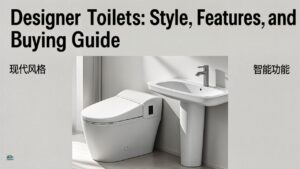
A toilet used to be the least exciting fixture in the bathroom. Today, that has changed. Designer toilets are no longer just about basic function; they are part of how a bathroom looks, feels, performs, and supports daily comfort.
For homeowners planning a bathroom renovation, the toilet can quietly influence everything from floor space and cleaning time to water use, accessibility, and resale appeal. A sleek model can make a small powder room feel more polished, while a feature-rich option can turn a primary bath into a more relaxing, spa-like space.
The challenge is that the category has become surprisingly broad. There are one-piece toilets, wall-hung toilets, smart toilets, bidet toilets, sculptural shapes, matte finishes, compact designs, concealed tanks, and comfort-height options. This guide will help you understand what matters, what may be unnecessary, and how to choose a toilet that looks beautiful without creating long-term headaches.
What Are Designer Toilets?
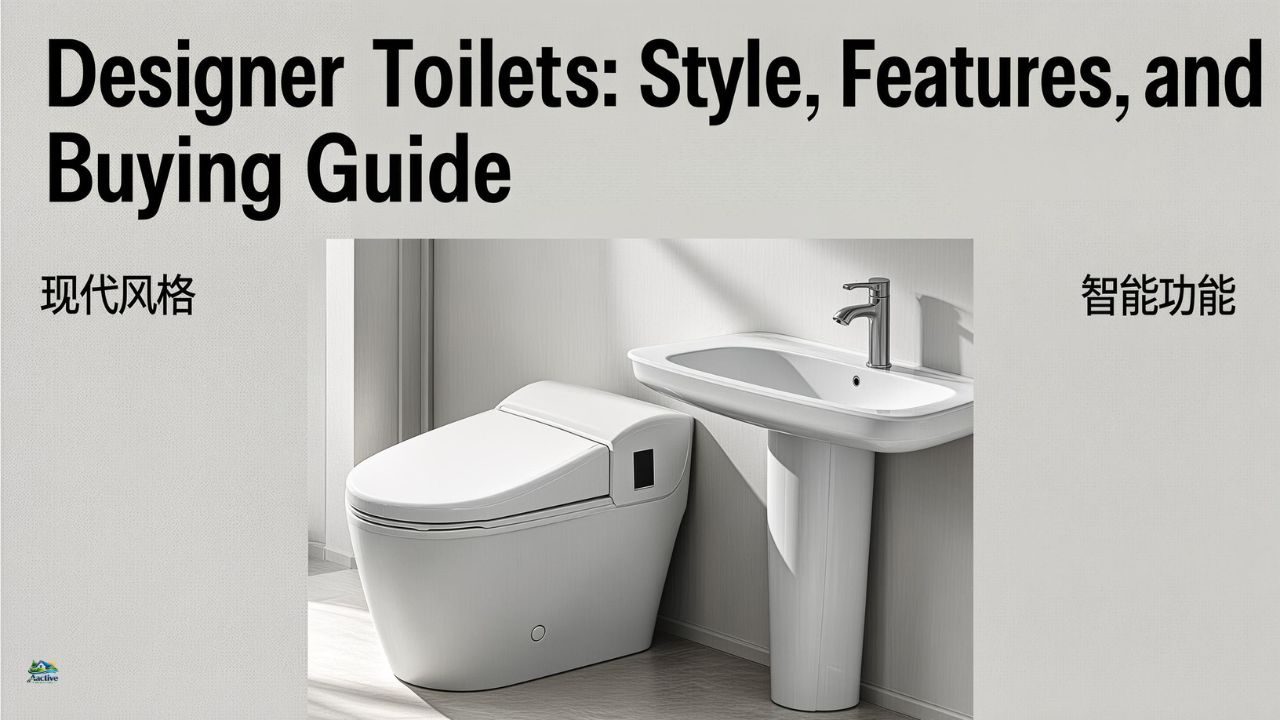
Designer toilets are toilets created with a stronger focus on aesthetics, comfort, materials, technology, and integration with the overall bathroom design. They still need to flush reliably, meet plumbing requirements, and be easy to maintain, but they also contribute to the room’s style.
A basic toilet is usually chosen for price and availability. A designer model is chosen for a more complete set of priorities, such as:
- A cleaner, more streamlined silhouette
- Better proportions for a modern bathroom
- Premium materials or finishes
- A concealed or skirted trapway
- A wall-mounted or floating appearance
- Smart functions such as heated seats or automatic flushing
- Water-efficient performance
- Better comfort for daily use
In many homes, the toilet is not meant to be the visual centerpiece. The best designs often do the opposite: they look refined, quiet, and intentional. They fit the architecture of the room instead of interrupting it.
Why the Toilet Matters More Than People Think
A toilet is one of the most-used fixtures in the home. It affects hygiene, cleaning, accessibility, layout, and long-term maintenance. Choosing the wrong one can lead to annoyances that last for years.
A bulky toilet can make a compact bathroom feel cramped. A difficult-to-clean base can collect dust and grime. A low seat may be uncomfortable for taller adults or people with mobility concerns. A trendy shape may look great online but clash with the rest of the bathroom once installed.
A well-chosen modern toilet, on the other hand, can improve the room in several practical ways:
- It can make the bathroom easier to clean.
- It can help the layout feel more open.
- It can support a more cohesive design style.
- It can reduce water use when properly selected.
- It can make daily routines more comfortable.
- It can increase the sense of quality in a remodel.
The goal is not simply to buy the most expensive toilet. The goal is to choose the right design for your space, your household, and your maintenance expectations.
Main Types of Designer Toilets
Different styles work better for different bathrooms. Before choosing a finish or feature package, it helps to understand the main toilet types.
One-Piece Toilets
One-piece toilets combine the tank and bowl into a single molded unit. They are popular in upscale residential bathrooms because they look cleaner and are usually easier to wipe down than two-piece models.
Because there is no gap between the tank and bowl, there are fewer seams where dust and moisture can collect. This makes them especially appealing in primary bathrooms, guest baths, and homes where low-maintenance design matters.
Best for:
- Contemporary bathrooms
- Easy-clean households
- Guest bathrooms
- Homeowners who want a smooth, finished look
Possible drawbacks:
- They may be heavier to move and install.
- They can cost more than basic two-piece toilets.
- Some models may offer less flexibility for repairs than standard designs.
Two-Piece Designer Toilets
A two-piece toilet has a separate tank and bowl. While this is the traditional toilet style, many higher-end versions now feature better proportions, skirted bases, elongated bowls, and refined tank shapes.
A designer two-piece model can be a smart choice when you want an elevated look without moving into the highest price range. It may also be easier to transport and install because the tank and bowl can be handled separately.
Best for:
- Traditional bathrooms
- Transitional spaces
- Budget-conscious remodels
- Homes where replacement parts should be easy to find
Possible drawbacks:
- The seam between the tank and bowl can require more cleaning.
- The look may be less seamless than a one-piece design.
- Some models feel bulkier in small bathrooms.
Wall-Hung Toilets
Wall-hung toilets are mounted to the wall, with the tank usually concealed inside the wall cavity. The bowl appears to float above the floor, creating a very clean, architectural look.
This style is common in luxury hotels and high-end contemporary homes. It can make a small bathroom feel more spacious because the floor remains visible underneath the bowl. It also makes mopping easier.
Best for:
- Minimalist bathrooms
- Small powder rooms
- Contemporary homes
- Wet rooms and high-design spaces
Possible drawbacks:
- Installation is more complex.
- The wall must support the carrier system.
- Access panels and service planning are important.
- Installation costs can be higher than standard toilets.
For new construction or a full bathroom gut renovation, a wall-hung model can be easier to plan. For a simple toilet replacement, it may require more work than expected.
Smart Toilets
Smart toilets combine a toilet with electronic features designed for comfort, hygiene, and convenience. Depending on the model, features may include a heated seat, warm-water cleansing, air drying, automatic flushing, deodorizing, night lighting, remote controls, or user presets.
They are often associated with luxury toilets, but there is now a wide range of options. Some are fully integrated smart toilets, while others are standard toilets paired with an advanced bidet seat.
Best for:
- Primary bathrooms
- Aging-in-place upgrades
- Households that value comfort
- Homeowners interested in bathroom technology
Possible drawbacks:
- They may require an electrical outlet nearby.
- More features can mean more things to maintain.
- Repairs may be more specialized.
- Some users may not need or want advanced functions.
A smart toilet can be a wonderful upgrade, but it should be chosen carefully. Comfort features are valuable only if they are easy to use and reliable over time.
Bidet Toilets
Bidet toilets include built-in cleansing features or are designed to work with a bidet seat. They are increasingly popular in US homes as people look for better hygiene, less toilet paper use, and a more comfortable bathroom experience.
A bidet toilet may be simple or advanced. Basic versions offer water cleansing. Higher-end models may include temperature control, adjustable pressure, a heated seat, air drying, and self-cleaning nozzles.
Best for:
- Primary bathrooms
- Households focused on hygiene
- Seniors or users with limited mobility
- Anyone who wants a more spa-like bathroom routine
Possible drawbacks:
- Electric models may need an outlet.
- Users need time to adjust.
- Some features require regular cleaning.
- Higher-end models can be expensive.
Compact Designer Toilets
Compact toilets are made for small bathrooms, half baths, apartments, and narrow layouts. They may have a shorter projection, a rounded bowl, a concealed tank, or a wall-hung design that saves visual space.
A compact designer toilet should still be comfortable. Saving a few inches is helpful only if the toilet remains practical for daily use.
Best for:
- Powder rooms
- Small guest bathrooms
- Urban apartments
- Tight remodel layouts
Possible drawbacks:
- Some compact models may feel less comfortable for taller users.
- Round bowls save space but may not feel as roomy as elongated bowls.
- Ultra-minimal models may have limited seat replacement options.
Popular Styles and Finishes
The right toilet should match the broader bathroom design. Shape, color, and finish can make a big difference.
White Designer Toilets
White remains the most common and versatile toilet color. It works with nearly every bathroom style, from farmhouse to modern luxury. It also tends to be easier to match with sinks, tubs, and other fixtures.
A white designer model can still feel special when it has a skirted base, slim tank, refined proportions, or a wall-mounted profile.
Best for:
- Timeless bathrooms
- Resale-friendly remodels
- Classic white fixtures
- Easy coordination
Black Toilets
Black toilets create a bold, dramatic look. They can work beautifully in powder rooms, moody bathrooms, modern spaces, and bathrooms with black-framed mirrors, dark stone, or matte black hardware.
The key is balance. A black toilet can feel elegant when paired with warm lighting, textured tile, natural wood, or soft neutral walls. In a poorly lit room, however, it may feel heavy.
Best for:
- Statement powder rooms
- Modern luxury bathrooms
- High-contrast designs
- Dark or dramatic interiors
Possible drawbacks:
- Water spots and dust may show more easily.
- Matching the sink or tub can be harder.
- It may be less universally appealing for resale.
Matte and Soft-Finish Toilets
Matte finishes can create a softer, more architectural look than glossy ceramic. They pair well with stone, plaster-style walls, microcement, warm wood, and brushed metal fixtures.
However, matte surfaces can require careful cleaning. Abrasive products may dull or damage the finish, so always check the manufacturer’s care instructions.
Colored Toilets
Colored fixtures are returning in more thoughtful ways. Soft green, beige, gray, clay, and other muted tones can add personality without making the bathroom feel dated too quickly.
A colored toilet works best when it is part of a clear design plan. For example, a soft taupe toilet may coordinate with a stone vanity top, while a sage-toned fixture may pair with handmade tile and warm brass.
Best for:
- Boutique-style powder rooms
- Vintage-inspired bathrooms
- Personalized remodels
- Homes with strong design direction
Possible drawbacks:
- Replacement matching can be difficult later.
- Strong colors may date faster.
- Some buyers prefer standard white fixtures.
Key Features to Compare Before Buying
A toilet can look beautiful and still be wrong for your home. These are the most important features to review before making a decision.
Bowl Shape
Toilets usually come with either round or elongated bowls.
Elongated bowls are generally more comfortable for adults and are common in higher-end bathrooms. Round bowls save space and may be useful in small powder rooms.
Choose elongated if comfort is the priority. Choose round only when space is tight or the layout demands it.
Toilet Height
Seat height affects comfort more than many people realize. Standard-height toilets are often lower, while comfort height toilets are taller and can be easier for many adults to use.
Comfort-height models may be especially helpful for taller users, older adults, or people who have difficulty sitting down and standing up. However, shorter users and children may find them less comfortable.
For accessibility-focused bathrooms, check current local requirements and applicable standards before choosing a model.
Flush Performance
Flush performance matters as much as style. A toilet should clear waste effectively without repeated flushing. Look for reliable flushing technology, a well-designed bowl, and clear manufacturer performance information.
Common flush types include:
- Gravity flush
- Pressure-assisted flush
- Dual flush
- Tornado or rimless-style flush systems
- Touchless or automatic flush systems
A powerful flush is helpful, but noise level also matters. Pressure-assisted toilets can perform well but may be louder than gravity-fed models.
Water Efficiency
Many water-saving toilets are designed to use less water per flush while still performing well. In the United States, WaterSense-labeled toilets are independently certified for both efficiency and performance. The EPA notes that WaterSense-labeled toilets use 1.28 gallons per flush or less, which is 20% less water than the current federal standard of 1.6 gallons per flush.
This is especially useful for larger households, eco-conscious remodels, and areas where water costs are high. Still, water efficiency should not come at the expense of reliable flushing.
Trapway Design
The trapway is the curved channel that carries waste away from the bowl. On many standard toilets, the trapway shape is visible along the side of the base.
A skirted trapway hides this curve, creating a smooth side profile. This is one of the most practical upgrades in high-end bathroom fixtures because it makes cleaning easier and gives the toilet a more polished look.
Seat Quality
The seat is easy to overlook, but it affects daily comfort. Look for:
- Soft-close hinges
- Quick-release cleaning
- Durable hardware
- Comfortable contouring
- Easy replacement options
A cheap seat on an expensive toilet can make the entire fixture feel less refined.
Cleaning Features
Designer bathrooms should not be difficult to maintain. Consider features such as:
- Rimless bowl design
- Skirted base
- Smooth glazing
- Quick-release seat
- Self-cleaning bidet nozzle
- Touchless flush
- Fewer seams and crevices
The easier a toilet is to clean, the better it will look over time.
Smart Features: Worth It or Not?
Smart features can improve comfort, but not every feature is essential. The best approach is to separate genuinely useful upgrades from novelty.
Features That Often Add Real Value
A heated seat is one of the most appreciated smart toilet features, especially in colder climates or primary bathrooms. Warm-water cleansing can also be valuable for comfort and hygiene.
Other useful features may include:
- Adjustable water temperature
- Adjustable spray pressure
- Soft night light
- Automatic lid opening and closing
- Deodorizing function
- Air drying
- User memory settings
- Remote control
These features can be especially helpful for aging-in-place bathrooms or users with limited mobility.
Features That May Be Less Important
Some smart toilets include highly advanced settings that many households rarely use. Voice control, app connectivity, dramatic lighting, or multiple user presets may sound impressive but may not matter in daily life.
Before paying more, ask:
- Will everyone in the household use this feature?
- Is it easy to control?
- Can it be repaired if something breaks?
- Does it require special cleaning or replacement parts?
- Is there a manual option during a power outage?
A toilet should never become frustrating because the technology is too complicated.
Cost and Budget Considerations
The cost of designer toilets varies widely depending on brand, materials, design, technology, and installation requirements. A simple but stylish one-piece toilet may be relatively approachable, while a fully integrated smart toilet or wall-hung system can be a major investment.
In many cases, your budget should include more than the fixture itself.
Consider:
- Toilet purchase price
- Delivery costs
- Old toilet removal
- Plumber labor
- Electrical work for smart models
- Wall carrier installation for wall-hung toilets
- Floor or tile repair
- Bidet seat compatibility
- Future replacement parts
A standard toilet replacement is usually simpler than installing a concealed-tank or wall-mounted system. If the bathroom walls or floors are already being opened during a remodel, that may be the right time to consider a more complex design.
Installation Factors You Should Not Ignore
A toilet must work with your existing plumbing and bathroom layout. Even the most beautiful fixture can become a problem if the rough-in, water line, electrical needs, or clearance requirements are overlooked.
Rough-In Size
The rough-in is the distance from the finished wall to the center of the toilet drain. In many US homes, 12 inches is common, but 10-inch and 14-inch rough-ins also exist.
Always measure before ordering. Do not assume every toilet will fit.
Floor Space and Door Clearance
Check the distance from the front of the toilet to the opposite wall, vanity, tub, or door. Also make sure cabinet drawers and doors can open comfortably.
A toilet may technically fit but still feel awkward if the clearance is too tight.
Electrical Needs
Many smart toilets and advanced bidet seats require a nearby GFCI-protected outlet. Adding an outlet after tile is installed can be inconvenient and costly.
Plan electrical needs early in the remodel process.
Water Supply Location
Some designer models have concealed sides or skirted bases that can interfere with existing water supply placement. Before buying, confirm that your shutoff valve location works with the toilet design.
Wall Support for Wall-Hung Toilets
A wall-hung toilet requires a proper in-wall carrier system. The wall structure must be planned correctly, and the service access panel should remain reachable.
This is not a casual swap for a standard floor-mounted toilet.
Accessibility and Comfort
A stylish bathroom should also be usable. Comfort, reach, and safe movement are especially important in homes with older adults, guests, children, or people with mobility limitations.
The US Access Board’s ADA guidance notes that accessible water closets include a seat height of 17 to 19 inches, with related requirements for grab bars, flush controls, and accessories in applicable accessible toilet rooms.
Private homes are not always required to follow commercial accessibility standards, but these measurements can still be useful when designing a more comfortable or aging-friendly bathroom. For major accessibility needs, consult a qualified contractor, designer, or accessibility specialist.
Important comfort considerations include:
- Seat height
- Bowl shape
- Grab bar placement
- Side clearance
- Flush control location
- Toilet paper holder reach
- Non-slip flooring
- Night lighting
- Ease of cleaning
A beautiful bathroom should not sacrifice safety or usability.
Best Designer Toilet Ideas by Bathroom Type
Different rooms call for different priorities. Here is how to think about the best toilet style for each space.
Primary Bathroom
The primary bath is where comfort upgrades usually make the most sense. This is the best location for a smart toilet, bidet toilet, heated seat, elongated bowl, or comfort-height model.
Good choices include:
- Smart toilets with heated seats
- Bidet toilets with adjustable cleansing
- Sleek one-piece models
- Wall-hung toilets for a spa-like look
- Quiet-flush designs
Avoid choosing based on looks alone. In a primary bathroom, daily comfort matters more than visual drama.
Guest Bathroom
A guest bathroom should feel clean, welcoming, and easy to use. A one-piece or skirted toilet is often a strong choice because it looks polished and is easy to maintain.
Good choices include:
- White or soft-neutral finishes
- Elongated bowl if space allows
- Soft-close seat
- Water-efficient flush
- Easy-clean base
Avoid overly complicated smart controls unless guests can use them intuitively.
Powder Room
A powder room is the perfect place to be more adventurous. Because it is small and visible to guests, the toilet can support a bolder design concept.
Good choices include:
- Black toilets
- Wall-hung toilets
- Compact one-piece models
- Colored fixtures
- Sculptural silhouettes
This is also where dramatic wallpaper, statement lighting, and unique tile can work beautifully.
Small Bathroom
In a small bathroom, space efficiency matters most. A compact elongated toilet, round-front toilet, or wall-hung model may help the room feel more open.
Good choices include:
- Short-projection toilets
- Wall-hung toilets
- Compact one-piece toilets
- Concealed tanks
- Light-colored finishes
Avoid bulky tanks, oversized bowls, and designs that block vanity doors or shower access.
Family Bathroom
A family bathroom needs durability and easy cleaning. This may not be the best place for the most delicate finish or complicated technology.
Good choices include:
- Durable white ceramic
- Soft-close seat
- Powerful flush
- Easy-clean skirted base
- Standard replacement parts
For homes with children, consider whether the seat height works for everyone.
How to Choose the Right Designer Toilet
Use this practical framework before buying.
1. Start With the Bathroom Layout
Measure first. Confirm rough-in size, available width, front clearance, water supply location, and nearby electrical access if needed.
Style decisions should come after the toilet is confirmed to fit.
2. Decide Your Main Priority
Choose the top reason you are upgrading. Is it appearance, comfort, hygiene, water savings, accessibility, easier cleaning, or luxury?
Your priority will guide the best choice.
For example:
- For easy cleaning, choose a one-piece or skirted toilet.
- For a luxury experience, consider a smart bidet toilet.
- For a small bathroom, consider compact or wall-hung designs.
- For aging-in-place, prioritize height, clearance, and controls.
- For timeless resale appeal, choose a refined white model.
3. Match the Style to the Room
A toilet should coordinate with the sink, tub, vanity, tile, and hardware. It does not need to match every fixture exactly, but it should feel intentional.
A square-edged toilet may suit a modern vanity. A softer, rounded model may work better in a traditional or transitional bathroom.
4. Review Cleaning and Maintenance
Ask how the toilet will look after five years of use. Smooth surfaces, reliable parts, and accessible cleaning areas matter more than a trendy shape.
Avoid designs with hard-to-reach grooves unless you are prepared for extra cleaning.
5. Check Parts and Warranty Support
Designer models can sometimes use specialized seats, flush buttons, bidet parts, or electronic components. Before buying, check whether replacement parts are available and whether the brand offers support in the US.
This is especially important for smart toilets and imported models.
6. Think About Long-Term Value
A toilet is not something most homeowners want to replace frequently. Choose a model that suits your lifestyle, not just the current trend.
A timeless, well-proportioned toilet with practical features often delivers better long-term value than a dramatic model that is difficult to maintain.
Designer Toilets Compared
| Type | Best For | Main Benefit | Possible Drawback |
|---|---|---|---|
| One-piece toilets | Most upgraded bathrooms | Smooth look and easier cleaning | Heavier and often more expensive |
| Two-piece designer toilets | Traditional or budget-conscious remodels | Familiar design with improved styling | More seams to clean |
| Wall-hung toilets | Modern and small bathrooms | Floating look and easier floor cleaning | More complex installation |
| Smart toilets | Primary bathrooms and luxury remodels | Comfort, hygiene, and automation | Higher cost and electrical needs |
| Bidet toilets | Hygiene-focused households | Cleansing comfort and reduced paper use | Learning curve and maintenance |
| Compact toilets | Powder rooms and tight spaces | Saves floor area | May be less comfortable |
| Black toilets | Statement bathrooms | Dramatic visual impact | Shows dust or water marks more easily |
Common Mistakes to Avoid
A beautiful bathroom can still go wrong if practical details are missed.
Choosing Style Before Fit
Never order a toilet based only on photos. Measure the rough-in, check dimensions, and confirm clearances first.
Forgetting About Cleaning
Some sculptural toilets look stunning but have difficult crevices or unusual surfaces. Choose a model that fits your cleaning habits.
Ignoring Seat Replacement
Designer toilet seats can be specific to the model. If the seat breaks or wears out, replacement should be available without hassle.
Overbuying Smart Features
A fully loaded smart toilet is not always necessary. Choose features you will actually use.
Choosing a Trendy Color Without a Plan
Colored toilets can look beautiful, but they should connect to the room’s palette. Avoid choosing a bold color just because it looks interesting in a showroom.
Not Planning Electrical Early
If you want a bidet seat or smart toilet, plan the outlet before the bathroom is finished.
Assuming All Tall Toilets Are Right for Everyone
Comfort-height toilets are helpful for many adults, but not ideal for every user. Consider the people who will use the bathroom most often.
Maintenance Tips for Long-Term Performance
A designer toilet should stay attractive and functional for years. Good maintenance habits make a noticeable difference.
Use non-abrasive cleaners unless the manufacturer says otherwise. This is especially important for matte, colored, or specialty finishes.
Clean around the seat hinges, flush button, and base regularly. If the toilet has a bidet function, follow the manufacturer’s instructions for nozzle cleaning and filter replacement.
For smart toilets, keep the remote dry and replace batteries as needed. If the model has a deodorizing cartridge or water filter, note the replacement schedule.
For wall-hung toilets, know where the access panel is located. Do not block it permanently with built-ins or tile details that make service difficult.
Simple habits help preserve both performance and appearance.
Are Designer Toilets Worth It?
Designer toilets can be worth it when they improve comfort, cleaning, layout, or the overall quality of a bathroom remodel. They are especially worthwhile in primary bathrooms, guest baths, powder rooms, and high-end renovations where every fixture contributes to the finished design.
They may not be worth it if you are updating a rental property on a tight budget, remodeling a rarely used basement bath, or planning to move soon and need only a basic replacement.
A good middle ground is often the smartest choice: a well-made, water-efficient, easy-clean toilet with a refined shape and comfortable seat. It may not have every luxury feature, but it can still make the bathroom feel more polished and functional.
Practical Buying Checklist
Before choosing a toilet, review this checklist:
- Confirm the rough-in measurement.
- Measure front and side clearances.
- Check the water supply location.
- Decide between one-piece, two-piece, wall-hung, smart, or bidet style.
- Choose round or elongated bowl.
- Choose standard or comfort height.
- Review flush performance.
- Look for water-efficient options.
- Confirm seat quality and replacement availability.
- Check cleaning requirements.
- Plan electrical access for smart features.
- Confirm installation complexity.
- Review warranty and parts support.
- Make sure the design matches the rest of the bathroom.
This simple checklist can prevent expensive mistakes.
FAQ
Are designer toilets only for luxury bathrooms?
No. While some designer models are expensive, the category also includes practical upgrades such as skirted bases, one-piece construction, compact shapes, soft-close seats, and better proportions. You can choose a more refined toilet without creating an ultra-luxury bathroom.
What is the best toilet style for a modern bathroom?
A one-piece, skirted, or wall-hung toilet usually works well in a modern bathroom. These styles have clean lines and fewer visible seams. For a primary bathroom, a smart bidet toilet can also fit a modern design if the controls and power needs are planned properly.
Are wall-hung toilets reliable?
Wall-hung toilets can be reliable when installed correctly with a proper in-wall carrier system. The key is professional installation, suitable wall structure, and accessible service panels. They are better suited to full remodels or new construction than simple toilet swaps.
Do smart toilets need electricity?
Most smart toilets and electric bidet seats need a nearby outlet. Some basic bidet attachments do not require electricity, but heated seats, warm water, air drying, automatic flushing, and night lights typically do.
Are black toilets hard to keep clean?
Black toilets can show dust, lint, mineral spots, and cleaning residue more easily than white toilets. They can still be practical, but they work best when you are comfortable with regular gentle cleaning and when the bathroom has good lighting.
What toilet is best for a small bathroom?
A compact one-piece toilet, round-front toilet, or wall-hung toilet can work well in a small bathroom. The best choice depends on the rough-in, door swing, vanity placement, and front clearance. Always measure before buying.
Are bidet toilets worth it?
Bidet toilets can be worth it for comfort, hygiene, and reduced toilet paper use. They are especially useful in primary bathrooms and accessibility-focused spaces. However, electric models cost more and may require maintenance, so choose features you will actually use.
Should a toilet match the sink and bathtub?
It does not have to match perfectly, but it should coordinate. White fixtures are easiest to pair. If you choose a black, colored, or matte toilet, repeat that color or finish elsewhere in the room so it feels intentional.
Conclusion
A toilet may not be the first fixture people think about when designing a bathroom, but it has a bigger impact than most homeowners expect. The right choice can make the room easier to clean, more comfortable to use, more efficient, and more visually complete.
The best designer toilets balance beauty with practical details: fit, flush performance, seat comfort, maintenance, water use, and long-term support. Whether you prefer a simple one-piece model, a dramatic black toilet, a floating wall-hung design, or a fully featured smart bidet toilet, the smartest decision is the one that fits your space and your daily routine.
Choose carefully, measure properly, and think beyond the showroom photo. A well-selected toilet should feel effortless for years, quietly supporting a bathroom that looks good and works beautifully.