Article
Have you ever looked at a dull concrete patio, garage floor, or basement and wondered if a simple coat of paint could completely transform it?
The answer is yes—but only if you do it correctly.
Many homeowners jump into painting concrete without understanding the preparation and products required for long-lasting results. The outcome is often peeling paint, fading colors, and frustration just a few months later. The good news is that with the right approach, painted concrete can remain attractive and durable for years.
Whether you’re refreshing a patio, updating a garage, or improving a basement floor, this guide will walk you through everything you need to know about painting concrete, from preparation to maintenance.
Why Homeowners Choose Concrete Painting
Concrete is durable, but it isn’t always visually appealing. Plain gray surfaces can make a space feel unfinished and lifeless.
That’s why concrete painting has become a popular home improvement project. A painted surface can instantly add color, character, and protection without the cost of replacing concrete.
Benefits of concrete painting include:
- Improved appearance
- Added surface protection
- Easier cleaning
- Better resistance to stains
- Increased curb appeal
- More design flexibility
A simple weekend project can dramatically change how a space looks and feels.
Understanding Concrete Before You Paint
Before starting painting concrete, it’s important to understand the material itself.
Concrete is porous. It absorbs moisture, dirt, oils, and chemicals over time. Because of this characteristic, preparation is often more important than the actual painting process.
Freshly poured concrete also needs time to cure.
Most professionals recommend waiting at least 28 days before applying paint.
Ask yourself:
- Is the concrete cracked?
- Is there moisture present?
- Has it been sealed previously?
Answering these questions helps determine the best preparation method.
How to Paint Concrete Successfully
Many people search for how to paint concrete because they assume the process is similar to painting drywall or wood.
It isn’t.
Concrete requires special preparation and products.
Here is the basic process for how to paint concrete correctly:
- Clean the surface thoroughly
- Repair cracks and damage
- Test for moisture
- Apply concrete primer
- Paint using concrete-specific products
- Allow proper drying and curing
Understanding how to paint concrete before beginning helps prevent costly mistakes.
Tools and Materials You’ll Need
Before starting, gather these supplies:
Cleaning Supplies
- Pressure washer
- Concrete cleaner
- Degreaser
- Stiff-bristle brush
Repair Supplies
- Concrete patch compound
- Caulk
- Putty knife
Painting Supplies
- Roller with extension pole
- Paint brushes
- Paint tray
- Primer
- Protective gear
Using quality materials makes a significant difference when painting concrete surfaces.
Surface Preparation: The Most Important Step
Professional painters often say that preparation determines success.
When painting concrete, preparation can account for nearly 80% of the project’s outcome.
Remove Dirt and Debris
Sweep thoroughly.
Then wash the area using a concrete cleaner designed to remove contaminants.
Remove Grease Stains
Oil and grease can prevent paint from adhering.
Use a degreaser and scrub thoroughly.
Repair Damage
Fill:
- Cracks
- Chips
- Small holes
Allow repairs to dry completely before moving forward.
Skipping preparation is one of the biggest reasons concrete painting projects fail prematurely.
Moisture Testing Before Painting
Concrete and moisture are closely connected.
Before learning how to paint concrete, you must check for hidden moisture.
Simple Plastic Sheet Test
Tape a clear plastic sheet to the concrete.
Leave it for 24 hours.
If moisture forms underneath, the concrete may require additional drying or waterproofing.
Ignoring moisture can lead to:
- Peeling paint
- Bubbling
- Mold growth
Proper moisture testing is an essential part of how to paint concrete successfully.
Choosing the Right Concrete Floor Paint
Not all paints work on concrete.
Selecting the correct concrete floor paint is critical for durability.
Popular options include:
Acrylic Latex Paint
Best for:
- Patios
- Walkways
- Light-traffic areas
Epoxy Paint
Best for:
- Garages
- Workshops
- Commercial spaces
Masonry Paint
Best for:
- Outdoor concrete
- Decorative surfaces
Quality concrete floor paint provides better adhesion and longer-lasting performance.
Painting Concrete Floors in Garages
Garages experience heavy traffic, chemical spills, and vehicle weight.
That’s why painting concrete floors in garages requires extra attention.
Recommended Products
For garages, epoxy-based systems generally outperform standard paints.
Benefits include:
- Chemical resistance
- Impact resistance
- Easy maintenance
- Professional appearance
Many homeowners choose painting concrete floors in garages because it creates a cleaner, brighter workspace.
Painting Concrete Floors in Basements
Basements can benefit tremendously from painting concrete floors.
A painted basement floor:
- Brightens dark spaces
- Reduces dust
- Improves appearance
- Makes cleaning easier
When painting concrete floors below grade, moisture testing becomes especially important.
Even small moisture issues can affect long-term performance.
Paint Concrete Surfaces Outdoors
Outdoor projects require products that can handle weather changes.
When you paint concrete outdoors, consider:
- UV exposure
- Rain
- Temperature fluctuations
- Foot traffic
Common outdoor projects include:
- Patios
- Walkways
- Pool decks
- Front porches
Choosing weather-resistant products helps paint concrete surfaces stay attractive longer.
Step-by-Step Application Process
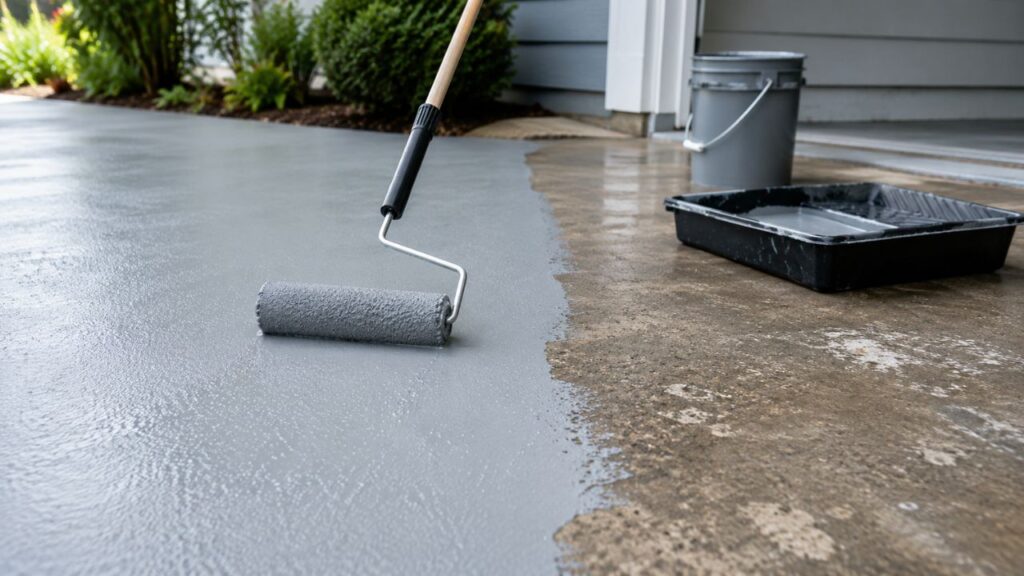
Once preparation is complete, it’s time for painting concrete.
Step 1: Apply Primer
Primer improves adhesion and helps paint bond properly.
Allow primer to dry according to manufacturer recommendations.
Step 2: Cut in Edges
Use a brush around:
- Corners
- Walls
- Expansion joints
Step 3: Roll the First Coat
Apply evenly.
Avoid excessive paint buildup.
Step 4: Allow Drying Time
Patience matters.
Many failures occur because surfaces are used too soon.
Step 5: Apply Additional Coats
Most projects benefit from two coats.
Following these steps makes concrete painting more durable and visually appealing.
Common Mistakes When You Paint Concrete Floor
Many homeowners rush through the process when they paint concrete floor surfaces.
Common mistakes include:
Skipping Primer
Primer improves durability.
Painting Damp Concrete
Moisture causes adhesion issues.
Using Interior Paint Outdoors
Outdoor conditions require specialized products.
Ignoring Surface Repairs
Cracks become more visible after painting.
Avoiding these mistakes helps ensure success when you paint concrete floor areas.
Decorative Concrete Painting Ideas
Beyond basic color changes, concrete painting allows for creative design possibilities.
Ideas include:
Faux Stone Finish
Creates a natural stone appearance.
Geometric Patterns
Adds modern style.
Stenciled Designs
Perfect for patios and porches.
Two-Tone Finishes
Creates visual interest.
Decorative concrete painting projects can dramatically enhance outdoor living spaces.
How to Paint Concrete Patios
Patios are among the most common projects for homeowners learning how to paint concrete.
A painted patio can:
- Improve curb appeal
- Refresh outdoor spaces
- Cover minor discoloration
When considering how to paint concrete patios, choose products specifically rated for exterior use.
This helps maintain color and durability through changing seasons.
Real-Life Example: A Weekend Patio Makeover
A homeowner had a 15-year-old patio covered in stains and fading.
Instead of replacing the concrete, they chose painting concrete as a budget-friendly solution.
The process included:
- Pressure washing
- Crack repairs
- Primer application
- Two coats of paint
The project cost less than a fraction of a replacement and completely transformed the backyard.
This example shows why painting concrete remains one of the most cost-effective upgrades available.
Maintaining Concrete Floor Paint
Even high-quality concrete floor paint requires maintenance.
Follow these practices:
Regular Cleaning
Sweep frequently.
Remove Spills Quickly
Prevent staining and chemical damage.
Avoid Dragging Heavy Items
Protect the painted surface.
Inspect Annually
Touch up worn areas before problems spread.
Proper maintenance helps concrete floor paint look great for years.
Paint Concrete Floor Projects on a Budget
You don’t need a huge budget to paint concrete floor surfaces.
Money-saving tips include:
- Purchasing paint during seasonal sales
- Renting equipment instead of buying
- Doing preparation work yourself
- Using quality products the first time
A small investment can completely refresh a space when you paint concrete floor areas properly.
Indoor vs Outdoor Concrete Painting
There are important differences between indoor and outdoor concrete painting.
Indoor Projects
Focus on:
- Durability
- Stain resistance
- Easy cleaning
Outdoor Projects
Focus on:
- UV resistance
- Weather protection
- Slip resistance
Understanding these differences improves the outcome of every concrete painting project.
Best Colors for Painted Concrete
Color selection matters more than many homeowners realize.
Popular choices include:
Gray
Modern and versatile.
Tan
Natural appearance.
Charcoal
Contemporary style.
Beige
Bright and welcoming.
When choosing colors, consider how the paint concrete surface will interact with nearby walls, landscaping, and furniture.
How Long Does Painted Concrete Last?
One of the most common questions about paint concrete projects concerns longevity.
Generally:
- Basic acrylic systems: 3–5 years
- High-quality systems: 5–10 years
- Professional epoxy coatings: 10+ years
Longevity depends on preparation, climate, traffic, and maintenance.
A properly prepared paint concrete surface lasts significantly longer than one completed with shortcuts.
Is Concrete Painting Worth It?
For most homeowners, the answer is yes.
Compared with replacing concrete, concrete painting offers:
- Lower costs
- Faster completion
- Design flexibility
- Immediate visual improvement
If your concrete is structurally sound, painting is often the smartest option.
Frequently Asked Questions
Can You Paint Old Concrete?
Yes, as long as it is cleaned and repaired properly.
Do You Need Primer?
In most cases, yes.
Primer improves adhesion and durability.
How Soon Can You Walk on Painted Concrete?
Typically 24–48 hours.
Always follow manufacturer recommendations.
Can You Paint Concrete Yourself?
Absolutely.
Many DIY homeowners achieve excellent results with proper preparation and patience.
Actionable Tips for Better Results
Want better outcomes immediately?
Follow these simple tips:
- Check weather forecasts before outdoor projects.
- Always test for moisture.
- Buy premium paint whenever possible.
- Allow full curing time.
- Clean thoroughly before painting.
Small details often create the biggest difference.
Final Thoughts
A well-executed concrete painting project can completely transform a garage, patio, basement, or walkway. While the process may seem straightforward, success depends heavily on preparation, product selection, and patience.
Whether you’re researching how to paint concrete, choosing the right concrete floor paint, planning painting concrete floors, or preparing to paint concrete floor surfaces throughout your home, the key is taking the time to do each step correctly.
Instead of living with dull, stained concrete, consider giving those surfaces a fresh new look. With proper planning and quality materials, painted concrete can remain attractive, durable, and easy to maintain for many years.
Conclusion
Painting concrete is one of the most affordable ways to improve the appearance and functionality of indoor and outdoor spaces. From patios and garages to basements and walkways, the right preparation and products can produce professional-looking results without the expense of replacement.
Start by cleaning thoroughly, repairing damage, testing for moisture, and selecting the right paint system. Follow proven application methods, allow adequate curing time, and maintain the surface regularly. Taking these steps helps ensure your investment lasts for years while adding beauty and value to your property.