Introduction
A noisy door can make a peaceful room feel impossible. If you have ever heard hallway chatter, traffic hum, barking dogs, roommates, gaming audio, or kitchen noise slipping through the cracks, how to soundproof a door becomes more than a DIY question—it becomes a quality-of-life project.
The good news is that you do not need to rebuild the whole house to make a real difference. Most door noise problems come from a few predictable weaknesses: air gaps, hollow cores, thin panels, loose frames, and sound flanking around the edges.
That said, honest expectations matter. A normal interior door can usually be made quieter, more private, and less annoying, but “100% silent” is rarely realistic without replacing the entire door assembly and treating the surrounding walls, floor, ceiling, and vents.
Noise control is worth taking seriously. The CDC’s NIOSH guidance says workers exposed to noise at or above 85 dBA over an eight-hour workday are at risk of significant hearing loss over a working lifetime, while the EPA identified 45 dB indoors as a level associated with preventing activity interference and annoyance. Those figures show why reducing everyday noise at home can affect comfort, focus, sleep, and stress—not just convenience.
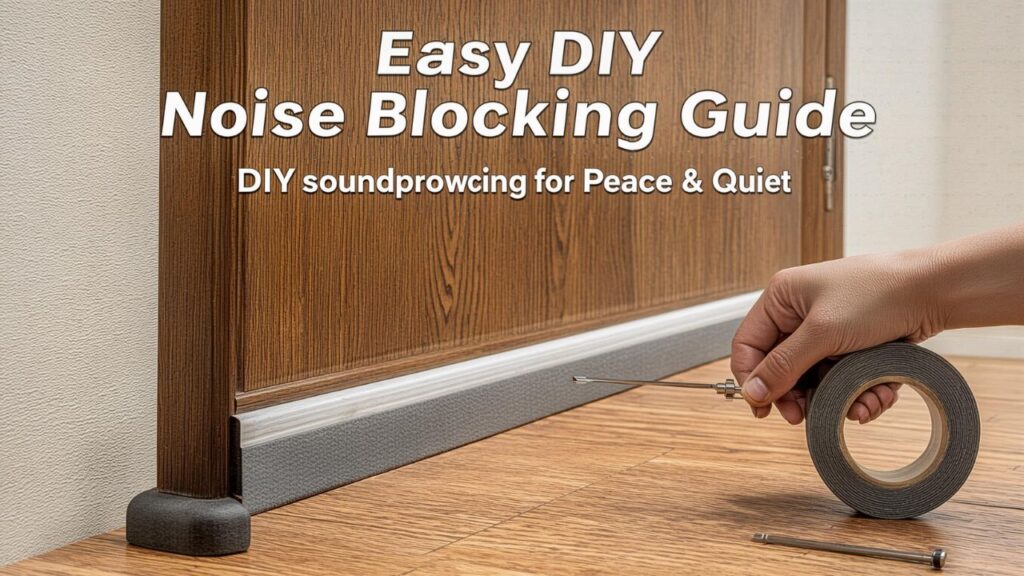
Table of Contents
- What Door Soundproofing Really Means
- Why how to soundproof a door Starts With Air Gaps
- Sound Basics Every Homeowner Should Know
- Best Materials for Door Noise Reduction
- how to soundproof a door Step by Step
- how to soundproof a door With Better Materials
- Apartment-Friendly and Rental-Safe Options
- Costs, Value, and Financial Insights
- Mistakes That Make Door Soundproofing Fail
- Real-Life Examples for Bedrooms, Offices, and Studios
- FAQ
- Conclusion
What Door Soundproofing Really Means
Door soundproofing means reducing the amount of sound that passes through, around, or under a door. In everyday language, people call this soundproofing. In building acoustics, it is more accurate to call it sound isolation, sound blocking, noise reduction, or acoustic sealing.
That distinction matters because foam panels, rugs, and soft décor can absorb echo inside a room, but they do not automatically stop sound from passing through a door. Absorption improves how a room sounds from the inside. Blocking reduces how much noise travels between spaces.
A door has three main sound weaknesses. First, sound can pass through the door slab itself, especially if it is hollow-core. Second, sound can leak through open gaps around the top, sides, and bottom. Third, sound can flank around the door through walls, vents, floors, ceilings, and nearby openings.
The most effective plan usually combines sealing, adding mass, improving the bottom gap, and treating the room enough that sound is not bouncing straight toward the door. One small fix may help, but layered fixes usually work better.
Why how to soundproof a door Starts With Air Gaps
If light or air can get through, sound can usually get through too. That is why the first stage is not buying expensive panels. It is finding and closing leaks.
The Gypsum Association explains that sealing every gap, joint, or penetration is one of the easiest sound control strategies because it helps prevent sound vibrations from flanking or transmitting indirectly. Door manufacturers and acoustic seal specialists make the same practical point: gaps around the edges and bottom of a door can undermine the performance of the whole assembly.
A door behaves like a wall with a movable hole in it. The better you seal the movable hole, the better the room feels. A tiny crack may look harmless, but sound is stubborn. It takes the easiest path.
Common leak points include:
- The gap under the door
- The latch side where the door meets the jamb
- The hinge side
- The top of the door frame
- Loose or warped trim
- A hollow-core door slab
- Keyholes or oversized latch openings
- Unsealed gaps between frame and wall
- Vents or returns near the door
A simple nighttime test can help. Turn the lights off inside the room, turn a bright light on outside, and look for glow around the door. Wherever light appears, sound probably has a path.
Sound Basics Every Homeowner Should Know
Before buying supplies, it helps to understand what you are fighting. Sound travels as vibration through air and materials. Voices, TV noise, and traffic are mostly airborne sound. Footsteps, slamming doors, and machinery can become structure-borne vibration.
Doors usually struggle with airborne sound because they are thin, movable, and full of gaps. Interior hollow-core doors are especially weak because they have less mass. They may look solid, but they often act like a lightweight drum.
Sound Transmission Class, or STC, is a rating used to describe how well a building partition reduces airborne sound. The National Institutes of Health’s Office of Research Facilities notes that STC specifies how well a door or wall assembly prevents sound from passing through, and federal construction guidance for sound-control door assemblies treats the door, frame, threshold, seals, gasketing, and hardware as part of the full assembly.
In plain English, the whole doorway matters. A heavy door with bad seals can disappoint you. A sealed hollow door can improve, but only so much. A proper acoustic door assembly works because the slab, frame, seals, threshold, and hardware are designed together.
You do not need to memorize lab ratings for a home project, but you should remember four principles:
- Seal air gaps first.
- Add mass where possible.
- Decouple or damp vibration when practical.
- Absorb echo inside the room so less sound hits the door.
These principles will keep you from wasting money on products that look scientific but solve the wrong problem.
Best Materials for Door Noise Reduction
The right material depends on whether you own the home, rent the space, need a quick fix, or want a serious upgrade. Some products are cheap and removable. Others require drilling, trimming, or replacing the door.
Acoustic weatherstripping
Acoustic weatherstripping seals the top and sides of the door where the slab meets the frame. Good seals compress when the door closes, forming a tighter barrier.
Foam tape is inexpensive and easy, but it can wear out quickly. Rubber, silicone, or magnetic-style seals may perform better. For serious rooms, use door gasket kits designed for acoustic use.
Door sweep or automatic door bottom
The bottom gap is often the loudest leak. A basic door sweep helps, but an automatic door bottom can be better because it drops a seal when the door closes and lifts when opened.
For bedrooms and offices, a sweep may be enough. For studios, therapy rooms, podcast booths, or shared apartments, an automatic drop seal can feel more polished.
Solid-core door
Replacing a hollow-core door with a solid-core door is one of the most meaningful upgrades. More mass usually blocks more sound. It also makes the door feel sturdier and more private.
A solid-core slab still needs perimeter seals. Without them, sound simply goes around the door instead of through it.
Mass loaded vinyl
Mass loaded vinyl, often called MLV, is a dense flexible barrier that can be attached to the door or hidden under a decorative panel. It adds weight without making the door extremely thick.
It can help, but installation matters. Loose edges, uncovered gaps, or poor adhesion reduce the benefit.
Acoustic panels and moving blankets
Panels and blankets do not truly seal a door, but they can reduce reflections and add a small amount of mass. Thick sound blankets are useful for temporary setups, renters, streamers, or musicians who need a quick improvement.
Avoid expecting lightweight foam tiles to block hallway noise. Foam mostly absorbs echo; it does not behave like a dense barrier.
Acoustic caulk
Acoustic caulk stays flexible and is useful for sealing gaps around the door frame, trim, or wall cracks. It is different from hard caulk because flexibility helps maintain a seal as materials move.
Use it where appropriate, but do not apply it where the door needs to move freely.
Threshold
A threshold gives the door bottom something to seal against. Interior doors often have a big gap over carpet, tile, or wood. Adding a threshold and sweep can reduce sound leakage dramatically.
how to soundproof a door Step by Step
The best order is simple: diagnose, seal, add mass, improve the bottom, then test. Jumping straight to the most expensive product can waste money if the basic leaks remain open.
Step 1: Identify where the sound is entering
Stand inside the room while someone makes noise outside the door. Listen near the bottom, sides, latch, hinges, and frame. You can also use your hand to feel drafts around the closed door.
If the noise is clearest at the bottom, start there. If voices seem to leak from all sides, perimeter seals matter. If the door itself feels thin and vibrates, mass will help.
Step 2: Seal the top and sides
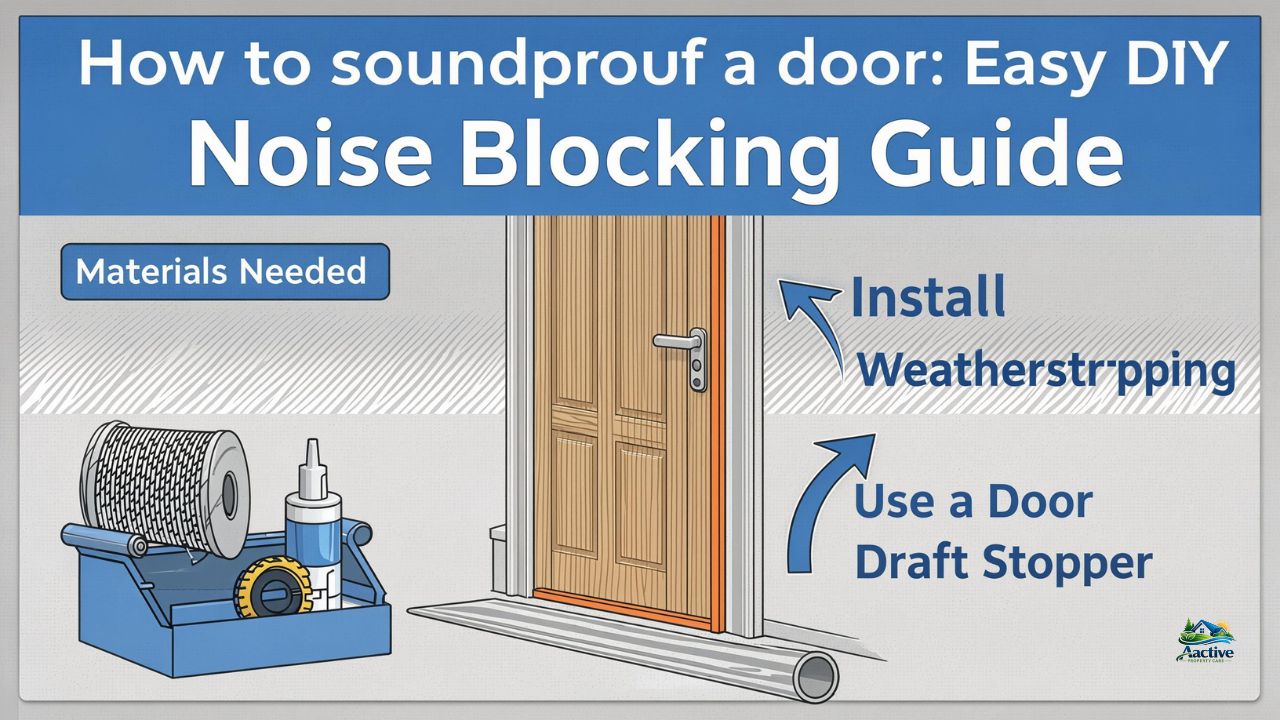
Clean the door frame so adhesive strips stick properly. Install weatherstripping along the stop where the closed door contacts the frame. The seal should compress slightly without preventing the latch from closing.
Do not make the seal so thick that you have to slam the door. A door that will not close gently will annoy everyone and may damage the latch.
Step 3: Fix the bottom gap
Install a door sweep, draft stopper, or automatic door bottom. For a better seal, pair it with a threshold. The goal is continuous contact across the full width of the door.
A fabric draft stopper is a cheap starting point, but it moves around. A mounted sweep is more reliable. A drop seal is cleaner and more effective for frequent use.
Step 4: Add mass to the door
If the door is hollow, sealing alone may not be enough. Add a dense barrier, a soundproofing blanket, a decorative MDF panel, or replace the slab with a solid-core door.
For a DIY panel, measure carefully and avoid blocking hinges, knobs, locks, or door swing. Extra weight may require longer screws, stronger hinges, or hinge adjustment.
Step 5: Seal the frame-to-wall gap
Sometimes sound leaks behind the trim, not through the visible door gap. If you remove casing, you may find open space between the jamb and framing. Fill appropriate gaps with backer rod and acoustic sealant, or use low-expansion foam where suitable.
Be careful with rental properties or finished trim. If you are unsure, ask a contractor before prying anything off.
Step 6: Test and adjust
After each improvement, test again. Play the same sound outside the room at the same volume and listen from the same spot. This helps you notice what actually changed.
Soundproofing is often incremental. You may not get silence, but you may reduce speech clarity enough that the room feels private.
how to soundproof a door With Better Materials
Once the gaps are sealed, better materials can push the project further. This is where you decide whether you need a mild upgrade or a serious acoustic improvement.
For moderate household noise, use quality perimeter seals, a door sweep, a draft-blocking threshold, and perhaps a heavy curtain or sound blanket. This works well for bedrooms, nurseries, home offices, and apartments.
For stronger privacy, replace a hollow-core slab with a solid-core door. Add acoustic seals on all sides and use an automatic door bottom. This combination gives the doorway more mass and fewer leakage points.
For recording, music practice, telehealth, therapy, podcasting, or confidential work, think in terms of a complete assembly. The WBDG sound-control door assembly guidance describes sound-control doors as systems involving the door, frame, special threshold, seals, gasketing, and hardware. That is the level of detail professional spaces use because one weak link can ruin the result.
Here is a practical comparison:
| Upgrade | Difficulty | Best for | Notes |
|---|---|---|---|
| Fabric draft stopper | Easy | Quick temporary help | Cheap but easy to move accidentally |
| Adhesive weatherstripping | Easy | Small gaps around frame | Replace when compressed or peeling |
| Door sweep | Easy to moderate | Bottom gap noise | Works best with a smooth floor or threshold |
| Acoustic caulk around frame | Moderate | Hidden cracks and trim leaks | Best for homeowners or approved rentals |
| Sound blanket | Easy | Temporary studios and renters | Helps most when heavy and tightly hung |
| Mass loaded vinyl | Moderate | Adding density to a door | Needs neat installation and edge control |
| Solid-core door | Moderate to hard | Major privacy upgrade | Check hinge strength and fit |
| Automatic door bottom | Moderate | Better bottom seal | More refined than a basic sweep |
| Full acoustic door assembly | Professional | Studios, clinics, offices | Highest cost and best performance |
Apartment-Friendly and Rental-Safe Options
Renters have a harder job because they usually cannot replace the door or permanently alter the frame. Still, there are useful options that do not require major construction.
Start with a removable draft stopper at the bottom. Add removable weatherstripping if your lease allows it. Hang a heavy curtain over the door using a tension rod, over-door hooks, or removable hardware. Place a rug outside or inside the door to reduce reflections from hard flooring.
A bookcase or upholstered furniture near the door can also soften reflections inside the room. It will not block the door like a seal does, but it may reduce the sharpness of sound.
Rental-friendly ideas include:
- Draft snake or weighted door blocker
- Removable silicone weatherstripping
- Heavy curtain over the doorway
- Over-door acoustic blanket
- Rug or runner near the door
- Soft wall hangings nearby
- White noise machine for privacy masking
- Door gap guards that slide under the slab
White noise is not soundproofing, but it can help with privacy. If hallway speech is still faintly audible, a fan or sound machine can make words harder to understand.
Costs, Value, and Financial Insights
There is no personal background or net worth angle for this topic because it is a home improvement method, not a public person. The financial insight is about choosing the right level of investment for the problem.
A low-cost fix might be under the price of a dinner out: a draft stopper, foam tape, and a basic sweep. That may be enough for a bedroom door that leaks hallway noise.
A mid-range fix includes better seals, an automatic door bottom, acoustic caulk, and possibly a heavy curtain. This suits home offices, shared apartments, and people who need calmer sleep.
A higher-cost fix usually means replacing the door slab, upgrading hardware, sealing the frame properly, and possibly hiring a carpenter. This makes sense when privacy, work quality, or recording quality matters.
| Budget level | Typical upgrades | Good fit |
|---|---|---|
| Low | Draft stopper, adhesive seals, basic sweep | Dorms, rentals, quick comfort |
| Moderate | Quality gaskets, threshold, acoustic curtain | Bedrooms, nurseries, home offices |
| Higher | Solid-core door, drop seal, frame sealing | Serious privacy and daily use |
| Professional | Acoustic-rated door assembly | Studios, clinics, offices, music rooms |
Think about the value of the room. If noise is ruining sleep, interrupting work calls, or making a rental feel stressful, even a modest door upgrade can feel surprisingly emotional. Quiet is not just a luxury; sometimes it is what lets the room finally work.
Mistakes That Make Door Soundproofing Fail
The biggest mistake is buying foam squares and expecting them to block sound. Foam can reduce echo inside the room, but it is too light to stop much noise from entering through a door.
The second mistake is ignoring the bottom gap. Many interior doors have a large undercut for air movement. That gap can transmit voices, TV sound, and hallway noise with almost no resistance.
The third mistake is sealing three sides but not the fourth. Door acoustic seals work best when the perimeter is continuous. Lorient’s acoustic door guidance emphasizes sealing all four sides with perimeter seals and threshold seals to maintain the acoustic integrity of the doorset.
The fourth mistake is adding weight without checking hardware. A heavy panel or solid-core slab can strain weak hinges. If the door sags, new gaps appear, and the sound problem returns.
The fifth mistake is forgetting ventilation. Some bedrooms and mechanical rooms rely on door gaps for airflow. Sealing a door may change air circulation, comfort, or HVAC balance. If a room becomes stuffy, talk to an HVAC professional about transfer grilles, ducted returns, or other solutions that preserve both comfort and privacy.
The sixth mistake is expecting a door fix to solve wall, window, floor, or ceiling noise. If the wall itself is thin, the door may not be the only problem.
The seventh mistake is skipping testing. You need before-and-after checks so you know whether the next dollar should go toward the door slab, the frame, the floor gap, or another noise path.
Real-Life Examples for Bedrooms, Offices, and Studios
Imagine a student in a shared apartment trying to study while roommates cook and talk in the hallway. The door is hollow, and there is a wide gap at the bottom. The first useful fix is not a fancy acoustic panel. It is a door sweep, removable seals, and a heavy curtain over the door. Add a small fan or white noise machine, and speech becomes less distracting.
Now picture a remote worker whose office door faces the living room. Video calls pick up cartoons, dishes, and conversations. A solid-core door, perimeter gasket, and automatic bottom seal may be worth the investment because the room supports income and professionalism.
For a nursery, the goal may be softer household noise rather than total silence. Weatherstripping, a quiet door latch, a rug in the hallway, and a white noise machine can reduce sudden disruptions without overcomplicating the room.
For a home music practice space, the door is only one part of the puzzle. Low-frequency sound from bass, drums, or amplified instruments can travel through walls and structure. A better door helps, but you may also need wall assemblies, isolation, acoustic treatment, and professional advice.
For a podcasting room, speech clarity is the issue. Seal the door, add mass, and then treat interior reflections with absorptive panels, curtains, rugs, and soft furnishings. The room will sound less boxy, and outside noise will be less obvious.
FAQ
What is the cheapest way to learn how to soundproof a door?
The cheapest starting point is to seal obvious gaps. Use a draft stopper or door sweep at the bottom, add adhesive weatherstripping around the frame, and place a rug near the door. These steps are affordable, reversible, and often make a noticeable difference.
Does a door sweep really reduce noise?
Yes, a door sweep can help because the bottom gap is one of the biggest sound leaks. It works best when it contacts a smooth floor or threshold across the full width of the door.
Is a solid-core door worth it?
A solid-core door is often worth it when the existing door is hollow and privacy matters. It adds mass, which helps block airborne sound. However, it still needs good seals around the edges and bottom.
Can I soundproof a door without replacing it?
Yes. You can seal gaps, add a sweep, hang a heavy curtain, use a sound blanket, apply dense material to the door, and seal cracks around the frame. Replacement is helpful, but it is not always the first step.
Do acoustic foam panels work on doors?
Acoustic foam panels can reduce echo in a room, but they are not strong sound blockers. They may make recordings sound cleaner, but they will not stop much hallway noise by themselves.
What is better, a door sweep or a draft stopper?
A mounted sweep is usually more reliable because it stays attached and seals consistently. A draft stopper is cheaper and rental-friendly, but it can shift out of place.
Should I use acoustic caulk around a door frame?
Acoustic caulk can help seal gaps around the frame, trim, or wall joints. It is most useful when there are cracks or hidden leakage paths. Do not put caulk where the door needs to open and close.
Can soundproofing a door make a room too airtight?
It can affect airflow, especially if the room relied on the door undercut for ventilation. If the room becomes stuffy or pressure changes when the HVAC runs, ask a professional about better ventilation options.
How much noise reduction should I expect?
It depends on the starting door, gaps, walls, floor, and type of noise. Simple sealing can reduce obvious leaks and speech clarity. A solid-core door with proper seals can do more. Low-frequency bass and vibration are much harder to control.
Conclusion
Door noise is frustrating because it feels personal. You close the door expecting privacy, and then voices, traffic, pets, TV, or household chaos slip right through as if the room has no boundary at all.
The best approach is calm and practical: seal the gaps, fix the bottom, add mass, tighten the frame, and test the results before spending more. Once you understand how to soundproof a door, the project becomes less mysterious and much easier to prioritize.
You may not create perfect silence, but you can make a room feel noticeably quieter, more private, and more comfortable. And sometimes that is exactly what home needs—a door that finally feels like it closes the world out for a while.