
Introduction
A welcoming entrance can change the whole feeling of a home. That is why front porch brick steps remain such a timeless choice. They look strong, warm, traditional, and inviting before anyone even reaches the front door.
Brick is not only decorative. Good brick steps handle foot traffic, weather, deliveries, pets, kids, guests, and years of daily use. When designed well, they improve curb appeal and make the entry feel cared for. When cracked, uneven, or slippery, they can make a home feel neglected.
This guide shares practical brick steps ideas, safety tips, design inspiration, repair advice, and styling suggestions for homeowners planning new steps or refreshing old ones.
Why Front Porch Brick Steps Matter
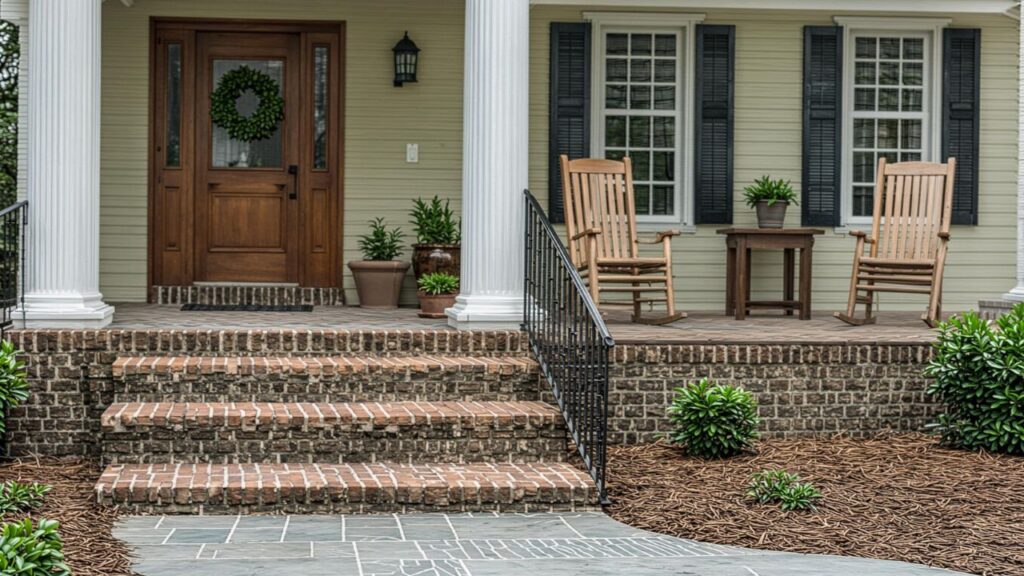
Front porch brick steps create the first impression of your home. They frame the entry, guide visitors to the door, and add texture to the exterior.
Brick also works with many home styles. It can look traditional, colonial, cottage, Craftsman, modern, or farmhouse depending on the brick color, mortar, railing, landing shape, and landscaping.
For homeowners wanting a warmer exterior, front porch brick steps ideas can include wide treads, curved landings, stone accents, black iron railings, planters, and soft porch lighting.
Best Brick Steps Ideas for Curb Appeal
Classic Straight Brick Steps
Straight brick steps are simple, balanced, and traditional. They work well for colonial, Cape Cod, Georgian, Tudor, and Craftsman homes.
Add black railings, matching lanterns, and two planters near the door for a polished look.
Wide Farmhouse Front Porch Brick Steps
Wide farmhouse front porch brick steps create a relaxed and welcoming entry. They work especially well with white siding, wood doors, board-and-batten details, and large porches.
This style gives you room for seasonal décor, such as ferns, pumpkins, lanterns, or small evergreens.
Curved Brick Steps
Curved steps soften the front of a home and create a graceful approach. They are ideal for traditional homes, Southern-style entrances, and houses with curved walkways.
Curved masonry needs careful planning, so it is best handled by an experienced mason.
Brick Steps with Stone Treads
Brick risers with stone treads create a refined look. Bluestone, limestone, granite, or cast stone can make the walking surface smoother while keeping the warmth of brick.
This is one of the most elegant brick front steps design ideas for homes that need both charm and durability.
Herringbone Brick Landing
A herringbone landing adds detail without making the whole entry too busy. It works well with simple step faces and classic railings.
This is a great option for homeowners who want custom-looking brick stairs outside without overcomplicating the design.
Choosing the Right Brick and Mortar
Not every brick is right for outdoor steps. Exterior brick stairs outside need durable materials that can handle rain, sun, foot traffic, and freeze-thaw conditions in colder climates.
Mortar color also matters. Light mortar gives a crisp traditional look. Tan mortar feels softer. Gray mortar is practical and common. Dark mortar can make the steps feel more modern.
If your house already has brick, try to match both the brick tone and the mortar color. A close brick match with the wrong mortar can still look awkward.
Farmhouse Brick Porch Style
A farmhouse brick porch should feel warm, simple, and useful. Wide steps, natural textures, wood railings, black metal accents, white trim, and layered doormats all work well.
Good farmhouse styling ideas include:
Large planters near the steps
A wood or black front door
Warm porch lighting
Simple railings
Seasonal flowers
Natural fiber doormats
Soft neutral paint colors
The goal is to make the entry feel relaxed, not overly formal.
Safety and Comfortable Step Design
Beautiful steps still need to be safe. Outdoor brick can become slippery when wet, mossy, icy, or poorly lit.
Important safety details include:
Consistent riser height
Comfortable tread depth
A landing with enough room to stand
Good drainage
Secure handrails
Bright but warm lighting
Slip-resistant surfaces
No loose bricks or crumbling mortar
If your front porch brick steps are uneven, sinking, or pulling away from the porch, repair or replacement may be needed.
Cost and Repair Insights
The cost of front porch brick steps depends on size, brick type, labor, demolition, drainage, railings, footing, and design details.
Simple repairs may include replacing loose bricks or repointing mortar. Larger projects may involve rebuilding the steps, adding stone treads, improving drainage, or installing new railings.
Repair may be enough when damage is small and the structure is stable. Replacement is usually better when the steps are sinking, cracking badly, holding water, or creating unsafe walking conditions.
Maintenance Tips for Brick Steps
Brick is durable, but it still needs care.
Sweep leaves and dirt regularly.
Keep gutters from draining onto steps.
Remove moss before it becomes slippery.
Check mortar joints each season.
Avoid harsh deicers unless safe for masonry.
Keep planters raised so water does not stain brick.
Inspect railings for loose anchors.
Clean brick gently instead of using harsh pressure washing.
Small maintenance habits can help brick steps last for many years.
Styling Ideas for a Welcoming Entry
Once the structure is safe, styling can make the entry feel finished.
Try these brick steps ideas:
Add matching planters.
Use a layered doormat.
Paint the front door a rich color.
Add warm exterior lighting.
Choose railings that match the house.
Frame the walkway with low landscaping.
Use seasonal décor carefully.
For red brick, colors like black, cream, tan, navy, olive, charcoal, and deep green usually work well.
Common Mistakes to Avoid
Avoid building new steps over a weak base.
Avoid ignoring drainage problems.
Avoid choosing brick from photos only.
Avoid making steps too steep or too narrow.
Avoid using glossy coatings that become slippery.
Avoid skipping railings where they are needed.
Avoid focusing on style while ignoring safety.
The best brick front steps design ideas balance beauty, comfort, drainage, and long-term durability.
FAQs
Are front porch brick steps slippery?
They can be slippery when wet, mossy, icy, or sealed with a glossy coating. Good drainage, cleaning, lighting, and railings help improve safety.
How long do brick steps last?
Well-built brick steps can last for decades with proper drainage, strong footing, suitable brick, and regular maintenance.
What are the best front porch brick steps ideas?
Popular ideas include straight brick steps, wide farmhouse steps, curved steps, stone treads, herringbone landings, black railings, and matching planters.
Are farmhouse front porch brick steps a good choice?
Yes. Farmhouse front porch brick steps create a warm, relaxed, and welcoming entry, especially when paired with wood, white trim, black accents, and simple landscaping.
Can brick be used for outdoor stairs?
Yes. Brick stairs outside can be durable and attractive when built with exterior-rated materials, proper drainage, and a stable base.
What is a farmhouse brick porch?
A farmhouse brick porch combines brick steps or flooring with relaxed country-style details such as wood accents, planters, warm lighting, and simple railings.
Conclusion
Front porch brick steps can make a home feel grounded, welcoming, and full of character. They bring warmth, texture, and structure to the entry in a way few materials can match.
Whether you want classic brick steps, wide farmhouse styling, curved masonry, stone treads, or fresh front porch brick steps ideas, the best design should be safe, comfortable, durable, and suited to your home.
A well-built brick entry does not need to shout for attention. It simply welcomes people home, season after season.