
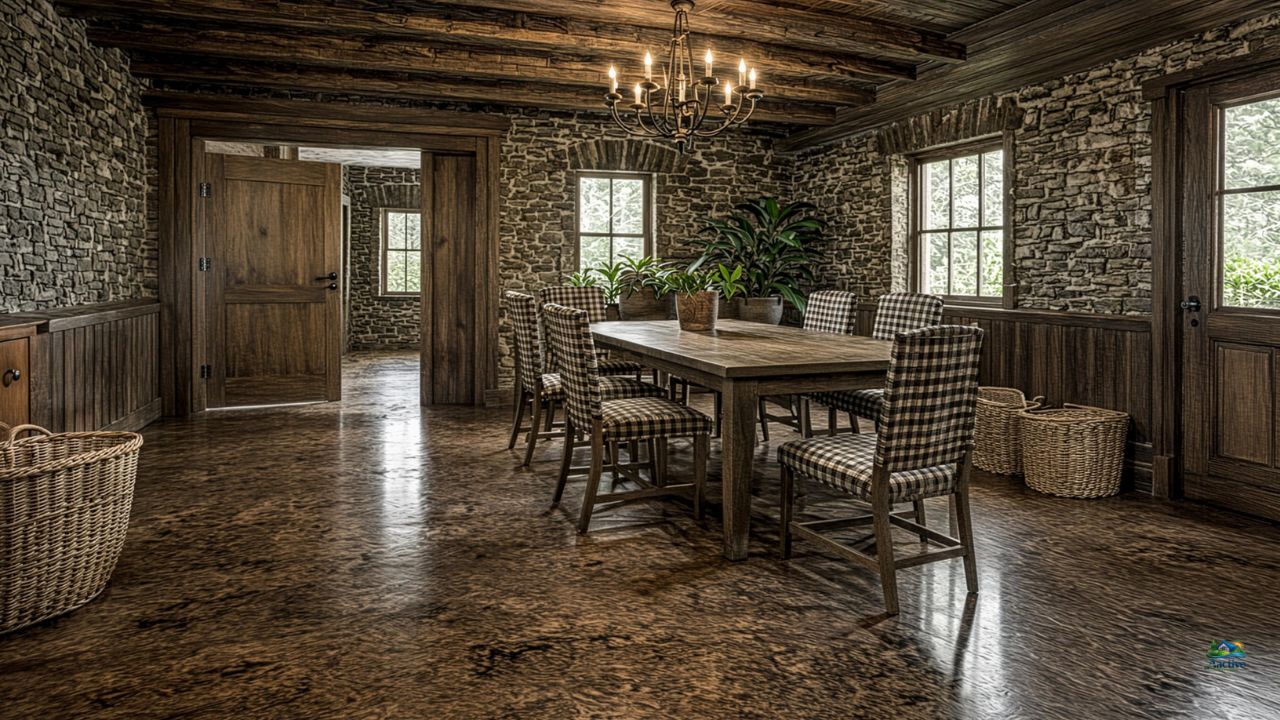
There is something quietly beautiful about a floor that looks lived-in from day one. farmhouse stained concrete floors bring that rare mix of rustic warmth, everyday toughness, and imperfect character that makes a home feel honest instead of overly staged.
If you have ever admired an old barn floor, a cozy barndominium, or a modern farmhouse kitchen with soft earth-toned flooring, stained concrete may already be on your radar. It matters because flooring is not just a background detail. It affects comfort, cleaning, budget, resale appeal, and the entire mood of a room.
Unlike trendy floors that look dated after a few seasons, stained concrete has a grounded, natural quality. It can lean rustic, industrial, European farmhouse, ranch-style, or clean modern farmhouse depending on the color, finish, furniture, and rugs around it.
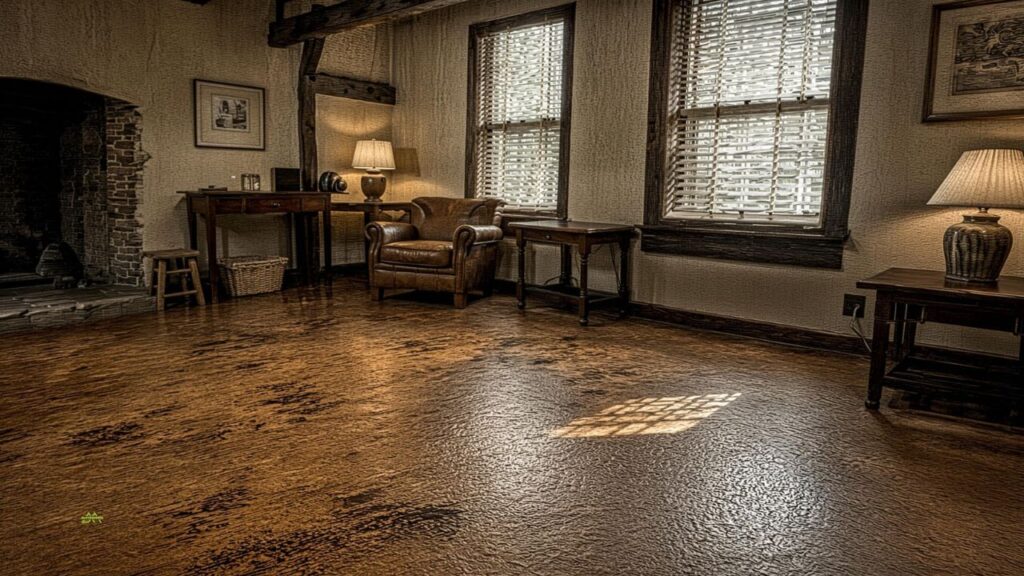
Table of Contents
- What Makes Stained Concrete Work in Farmhouse Homes
- Best farmhouse stained concrete floors Ideas for Real Rooms
- Acid Stain vs Water-Based Stain
- Colors and Finishes That Fit the Farmhouse Look
- Room-by-Room Design Ideas
- Cost, Value, and Financial Insights
- Pros and Cons Before You Commit
- Installation, Sealing, and Maintenance
- Styling Tips for Warm, Livable Concrete Floors
- FAQs
- Conclusion
What Makes Stained Concrete Work in Farmhouse Homes
Farmhouse style has always been about usefulness first. Wide tables, practical kitchens, hardworking mudrooms, deep sinks, washable fabrics, and natural textures all come from a way of living where beauty had to survive real life. Concrete fits that story better than many people expect.
Stained concrete is not paint sitting on top of a slab. Depending on the stain type, color either reacts with or penetrates the concrete surface, creating a finish that feels integrated rather than pasted on. Concrete Network explains that acid stains chemically react with hydrated lime in concrete, while water-based stains use pigments and polymers to create more predictable color without the same chemical reaction.
That difference matters. A farmhouse interior usually looks best when materials feel authentic. Concrete already has variation, faint cracks, trowel marks, mineral movement, and small irregularities. Staining does not erase those details; it often makes them part of the design.
Definition: stained concrete flooring
Stained concrete flooring is a decorative floor finish created by applying a colored stain to a concrete slab, then sealing the surface for protection. The final look may be translucent, mottled, smooth, rustic, matte, glossy, marbled, or softly weathered.
In a farmhouse home, the goal is rarely perfection. The better goal is warmth. A floor that shows soft movement, gentle color shifts, and natural texture can make a new build feel less sterile and an older home feel more connected to its roots.
Best farmhouse stained concrete floors Ideas for Real Rooms
The best farmhouse stained concrete floors are not one-size-fits-all. A Texas barndominium with vaulted ceilings may need a different finish than a small cottage kitchen or a renovated basement family room. The trick is choosing a stain and sealer that suit the room’s light, scale, furniture, and level of daily wear.
1. Warm walnut stained concrete
Walnut brown is a classic choice because it feels earthy without becoming too orange. It works beautifully with white walls, black windows, reclaimed wood beams, cream upholstery, and vintage rugs.
A walnut stain can make concrete feel almost leather-like, especially with a satin sealer. If you want a cozy farmhouse look rather than a sleek industrial one, keep the finish soft and avoid a mirror-like gloss.
2. Weathered gray-brown concrete
Pure gray flooring had a huge moment, but many designers and homeowners now prefer warmer neutrals. A gray-brown stain gives you the calmness of gray with the softness of taupe. It pairs well with oak cabinets, stone fireplaces, woven baskets, warm white walls, and aged brass.
This color is especially helpful in homes where you want concrete to feel natural, not cold. It also hides dust and everyday marks better than very dark brown or pale beige.
3. Rustic leather acid stain
Acid stain is famous for its marbled, unpredictable finish. It can produce beautiful amber, coffee, olive, terra-cotta, and brown tones. Concrete Network notes that acid stains are typically available in subtle earth tones and create natural variation because each slab accepts stain differently.
That imperfect movement is exactly why many homeowners love it. The floor does not look factory-made. It looks aged, layered, and quietly personal.
4. Soft beige concrete for modern farmhouse spaces
Beige stained concrete can look surprisingly elegant when handled carefully. Instead of yellow tan, aim for sand, oatmeal, mushroom, limestone, or warm greige. These shades make rooms feel relaxed and airy.
Soft beige is ideal for open-plan living areas where the floor needs to connect the kitchen, dining room, entry, and living room without shouting for attention.
5. Charcoal stained concrete with rustic wood
Charcoal floors can be dramatic and handsome, especially in homes with wood ceilings, stone fireplaces, or black metal stair railings. However, dark concrete shows dust, pet hair, and light debris more easily.
Use charcoal in spaces where you want mood: a den, home office, basement lounge, or barndominium great room. Then balance it with warm wood, layered rugs, linen curtains, and softer wall colors.
6. Saw-cut concrete that mimics stone tile
For homeowners who want more pattern, saw-cut lines can create the look of large stone tiles. The cuts may be arranged in squares, rectangles, diamonds, or oversized flagstone-inspired shapes.
This is a clever way to make concrete feel more traditional. It also works well in entryways and kitchens where a plain slab might feel too minimal.
Acid Stain vs Water-Based Stain
Choosing between acid stain and water-based stain is one of the biggest decisions in any stained concrete project. Both can look beautiful, but they behave differently.
Acid stain
Acid stain creates color through a chemical reaction. It penetrates the surface and reacts with minerals in the concrete, producing translucent, variegated tones. Because it becomes part of the surface, it does not chip or peel like a coating. Concrete Network describes acid stain as a reactive coloring product that chemically alters the concrete and becomes permanent once the reaction occurs.
The downside is unpredictability. The same stain can look different from one slab to another. Old adhesive, patching, curing compounds, oil spots, or uneven concrete can affect the result. For some people, that is charm. For others, it is stress.
Water-based stain
Water-based stain is generally more predictable. It can offer a wider color range, including soft neutrals, deeper browns, muted greens, blacks, grays, and even more vibrant colors. Concrete Network notes that water-based stains penetrate concrete to create permanent color but do not rely on a chemical reaction, so results are more consistent. It also notes that many water-based stains are low-VOC and do not require neutralization.
Sherwin-Williams similarly describes water-based concrete stains as easier to apply, generally more eco-friendly than acid stains, and capable of offering both subtle earth tones and more creative colors when properly sealed.
Quick comparison table
| Feature | Acid stain | Water-based stain |
|---|---|---|
| Look | Mottled, marbled, organic | More even, controllable, flexible |
| Farmhouse feel | Rustic, aged, earthy | Modern farmhouse, soft neutral, custom |
| Color range | Mostly earth tones | Broader range |
| Predictability | Lower | Higher |
| Application | More complex | Often easier |
| Best for | Character-rich slabs | Planned color palettes |
| Watch out for | Existing slab flaws | Flat color if applied poorly |
Colors and Finishes That Fit the Farmhouse Look
Color is where farmhouse stained concrete floors either become warm and soulful or cold and disappointing. The safest advice is simple: choose colors that look like nature, not plastic.
Warm brown and coffee tones
Coffee, walnut, saddle, chestnut, and tobacco stains suit rustic farmhouse interiors beautifully. These colors echo aged beams, leather chairs, antique furniture, and old barn doors.
If the room has white shiplap or painted cabinetry, brown concrete can keep it from feeling too crisp. If the room already has a lot of dark wood, choose a lighter brown so the whole space does not feel heavy.
Greige and taupe tones
Greige is a quiet hero in modern farmhouse design. It blends gray and beige, which helps concrete look softer under warm lighting. Taupe stained concrete works especially well in bedrooms, bathrooms, kitchens, and open living spaces where comfort matters.
It also plays nicely with black, brass, nickel, oak, linen, stone, and cream. That makes decorating easier over time.
Terra-cotta and clay tones
For a farmhouse with Mediterranean, Southwest, or rustic ranch influence, clay-toned concrete can be stunning. It gives the floor warmth and history, almost like old tile without grout lines.
Use restraint. A little terra-cotta glow feels warm; too much orange can feel dated. Pair it with plaster walls, woven shades, creamy textiles, and matte black or aged bronze hardware.
Matte, satin, or gloss finish
The finish can change everything. Matte concrete feels soft, understated, and rustic. Satin gives a gentle glow without looking too polished. High gloss can work in commercial or modern spaces, but in farmhouse interiors it can feel slippery, shiny, and less natural.
For most homes, satin is the sweet spot. It reflects enough light to feel clean but still lets the floor look grounded.
Room-by-Room Design Ideas
Concrete floors behave differently depending on the room. A kitchen floor needs to survive dropped spoons, spills, and traffic. A bedroom needs warmth. A mudroom needs toughness. A bathroom needs sealing and slip awareness.
Kitchen
Farmhouse kitchens and stained concrete are a natural match. The floor can handle heavy traffic, cooking mess, and frequent sweeping. Pair warm brown or greige concrete with shaker cabinets, soapstone-look counters, butcher block, apron-front sinks, open shelves, and woven runners.
A real-life example: imagine a busy family kitchen where kids come in from the yard, the dog slides under the island, and dinner prep leaves crumbs everywhere. A sealed concrete floor will not panic. It asks for a broom, not a dramatic rescue.
Living room
In a living room, concrete needs softness around it. Use layered rugs, upholstered seating, linen curtains, wood tables, baskets, and warm lighting. Without texture, the room can feel echoey or unfinished.
The best farmhouse stained concrete floors in living spaces usually have subtle variation rather than sharp pattern. Let the rugs and furniture create the cozy zones.
Bathroom
Concrete can work in bathrooms, but sealing is essential. Water, soap, and cleaning products can affect unprotected surfaces. A matte or lightly textured finish is usually more comfortable underfoot than a slick, glossy sealer.
Concrete bathroom floors can feel spa-like when paired with plaster walls, wood vanities, stone sinks, linen towels, and soft lighting. Just avoid letting the space become too hard and cold.
Mudroom and laundry room
This may be concrete’s happiest place. Mudrooms, laundry rooms, and utility spaces benefit from a durable surface that can handle boots, baskets, pet bowls, and dropped tools.
A medium brown, taupe, or charcoal stain hides daily mess better than pale flooring. Add washable rugs near doors and machines for comfort.
Basement or barndominium
Stained concrete is especially popular in basements and barndominiums because the slab is often already there. Instead of covering it with carpet or vinyl, staining turns the existing surface into a finished design element.
For basement spaces, test moisture before staining and sealing. Trapped moisture can cause sealer problems, cloudy finishes, or adhesion issues.
Cost, Value, and Financial Insights
Cost is one of the biggest reasons homeowners consider stained concrete. If you already have a usable slab, you may avoid the material cost of installing a separate floor. However, the final price depends heavily on surface condition, prep work, stain type, complexity, and sealer.
HomeAdvisor’s 2025 stained concrete cost guide lists stained concrete floors at about $2 to $28 per square foot, with an average project cost around $11,000. It identifies stain type, labor, preparation, and sealers as major cost factors.
Concrete Network gives a more detailed decorative range: basic staining with one color, minimal prep, and sealer may run about $3 to $6 per square foot, while intermediate, upgraded, or high-end work with multiple colors, saw cuts, stencil work, or hand-applied effects can rise from about $6 to $25+ per square foot.
Cost comparison table
| Project level | Typical look | Estimated cost range | Best for |
|---|---|---|---|
| Basic stain | One color, simple sealer | $3–$6 per sq. ft. | Budget farmhouse updates |
| Mid-range stain | More prep, richer finish, possible color layering | $6–$11 per sq. ft. | Main living areas |
| Upgraded stain | Saw cuts, multiple colors, custom pattern | $11–$16 per sq. ft. | Kitchens, entries, great rooms |
| High-end decorative | Stencils, hand detailing, complex finishes | $16–$25+ per sq. ft. | Custom homes and statement spaces |
Financial insight for homeowners
The smartest financial question is not “Is stained concrete cheap?” It is “Is my slab a good candidate?” A stained concrete project can become costly if the slab needs grinding, patching, adhesive removal, crack repair, moisture mitigation, or a decorative overlay.
If your concrete is clean, level, and structurally sound, staining can be budget-friendly and long-lasting. If it is covered in old glue, paint, oil, moisture issues, or major cracks, prep may eat up the savings quickly.
Does it add value?
Stained concrete can support resale appeal when it fits the home’s architecture and local buyer expectations. It may be especially attractive in barndominiums, ranch homes, modern farmhouse builds, warm-climate homes, workshops, basements, and open-plan living spaces.
That said, not every buyer loves concrete. Some people find it hard, cold, or too industrial. Rugs, radiant heat, warm stain colors, and good styling can soften those concerns.
Pros and Cons Before You Commit
Every flooring choice has trade-offs. Concrete is tough, but it is not magic. It can crack. It can feel hard. It can be cold. It also has a character that some homeowners adore and others never quite warm up to.
Pros
- Durable: Concrete handles traffic, pets, furniture, and daily wear well when sealed properly.
- Low-maintenance: Regular sweeping and damp mopping are usually enough for routine care.
- Design flexibility: Stain can create rustic, modern, marbled, stone-like, or leather-like finishes.
- Works with radiant heat: Concrete can pair well with radiant floor heating when planned correctly.
- Good for open plans: One continuous floor can make large farmhouse layouts feel connected.
- Fewer grout lines: Compared with tile, stained concrete avoids grout maintenance across large spaces.
Cons
- Hard underfoot: Standing for long periods can be tiring, especially in kitchens.
- Can feel cold: Rugs, slippers, and radiant heat help, but the material itself is dense.
- Cracks may show: Some cracks look charming; others look like damage.
- Sealer matters: Poor sealing can lead to stains, dullness, or water issues.
- Not always DIY-friendly: Prep and sealing mistakes can be expensive to fix.
- Existing slabs are unpredictable: Old concrete may reveal patches, ghosting, or uneven absorption.
Practical reality
If you want a flawless, uniform, cushioned floor, concrete may frustrate you. If you enjoy patina, texture, and a floor that feels grounded in the architecture, farmhouse stained concrete floors can be deeply satisfying.
Installation, Sealing, and Maintenance
The success of a stained concrete floor is mostly decided before the stain goes down. Surface preparation is everything. Dirt, paint, adhesive, oil, curing compounds, and patch materials can all interfere with stain absorption.
Basic installation process
Most professional projects follow a sequence like this:
- Inspect the slab for cracks, moisture, coatings, glue, and contamination.
- Clean, grind, or mechanically prepare the surface.
- Test stain in a hidden area or sample board.
- Apply stain in controlled layers.
- Neutralize and rinse if using acid stain.
- Let the floor dry fully.
- Apply sealer.
- Add wax or floor finish if the system requires it.
Sealer choices
Sealer protects the color and surface. Common options include acrylic, polyurethane, epoxy, and penetrating sealers, though the best choice depends on the room, traffic, desired sheen, and installer’s system.
A farmhouse home usually looks best with a matte or satin sealer. Gloss can highlight imperfections and make the floor feel more commercial.
Maintenance routine
Polished and sealed concrete is usually simple to maintain, but harsh cleaners can damage the finish. Craftsman Concrete Floors recommends cleaning polished concrete with clean water or a neutral-pH cleaner and avoiding acidic or overly alkaline cleaners that can dull the surface.For daily life, keep it simple:
- Sweep or vacuum grit regularly.
- Wipe spills quickly, especially oil, wine, citrus, vinegar, and harsh chemicals.
- Damp mop with a neutral cleaner.
- Use felt pads under furniture.
- Place rugs at entries and sinks.
- Reseal or refresh the protective finish as recommended by your installer.
How often should it be resealed?
There is no single answer. A lightly used bedroom floor may go longer than a busy kitchen or mudroom. Traffic, pets, cleaning habits, sunlight, sealer type, and finish expectations all matter. Ask your contractor for a written maintenance schedule based on the exact products used.
Styling Tips for Warm, Livable Concrete Floors
The biggest mistake people make with concrete is treating it like a cold industrial surface instead of a natural design base. Farmhouse style needs warmth, layers, and softness.
Add rugs where life happens
Use rugs in the kitchen, living room, bedroom, and entry. A vintage-style runner can completely change the feeling of a concrete floor. It reduces echo, adds softness, and brings in pattern without permanently changing the surface.
Mix with natural materials
Concrete looks best when balanced with wood, linen, wool, leather, cane, rattan, clay, stone, and aged metals. A stained floor beside a sterile white sofa and chrome furniture may feel cold. The same floor beside an oak table, cream slipcovered chairs, and woven pendants feels welcoming.
Keep walls warm
Warm white, cream, mushroom, sage, clay, plaster beige, and soft greige walls pair beautifully with stained concrete. Blue-white paint can make concrete look colder, especially in north-facing rooms.
Use lighting generously
Concrete changes under light. Warm lamps, sconces, pendants, and natural daylight bring out its depth. A single ceiling light can flatten the floor and make the room feel unfinished.
Let imperfections breathe
Do not fight every mark. Part of the farmhouse mood comes from surfaces that look touched by time. A faint crack, mineral variation, or color shift can feel charming when the rest of the room is intentional.
FAQs
Are farmhouse stained concrete floors good for kitchens?
Yes, they can be excellent for kitchens because they are durable, easy to sweep, and visually seamless in open layouts. Use a quality sealer, add a runner near the sink, and choose a warm tone so the kitchen does not feel cold.
What color stain looks best in a farmhouse home?
Warm walnut, coffee, greige, taupe, soft beige, and clay-brown tones usually work best. These colors pair naturally with wood beams, white cabinets, vintage rugs, black hardware, and relaxed farmhouse furniture.
Is acid stain better than water-based stain?
Neither is automatically better. Acid stain is ideal for organic, marbled, earthy variation. Water-based stain is better when you want predictable color, a wider palette, lower odor, or a more controlled modern farmhouse look.
Do stained concrete floors crack?
Concrete can crack, even when finished beautifully. Some cracks are minor and blend into the rustic character of the floor, while larger structural cracks may need repair before staining. Always inspect the slab before committing.
Are stained concrete floors slippery?
They can be slippery if the sealer is glossy or not chosen for the room’s use. Matte or satin finishes with the right slip-resistant additive can make the floor more practical, especially in bathrooms, kitchens, and entries.
Can I DIY farmhouse stained concrete floors?
DIY is possible for small, simple areas, but results depend heavily on prep, moisture conditions, stain choice, and sealer application. For main living spaces, professional installation is often safer and more predictable.
Are stained concrete floors cold?
Concrete can feel cool underfoot because it is dense. Rugs, slippers, sunlight, and radiant floor heating can help. In warm climates, that coolness may actually be a benefit.
How do you clean stained concrete floors?
Sweep or vacuum regularly, then damp mop with water or a neutral-pH cleaner. Avoid vinegar, harsh degreasers, bleach-heavy cleaners, and abrasive pads unless your installer specifically approves them.
Do farmhouse stained concrete floors work with rugs?
Absolutely. Rugs are one of the best ways to soften concrete and make it feel more farmhouse than industrial. Vintage, jute, wool, cotton, and washable runners all work well depending on the room.
How long do stained concrete floors last?
With good prep, proper sealing, and sensible maintenance, stained concrete can last for many years. The color itself may be long-lasting, but the protective sealer or floor finish will need periodic care based on traffic.
Conclusion
farmhouse stained concrete floors are not for people who need every surface to look brand-new forever. They are for people who appreciate texture, warmth, durability, and a little honest imperfection. That is exactly why they fit farmhouse homes so well.
A good stained concrete floor can make a kitchen feel grounded, a barndominium feel finished, a basement feel intentional, and a busy mudroom feel almost indestructible. The secret is choosing the right stain, the right color temperature, and the right sealer for the way you actually live.
Go warm instead of cold. Test before committing. Respect the slab you already have. Add rugs, wood, fabric, and soft lighting. When everything comes together, concrete stops feeling like a construction material and starts feeling like part of the home’s story.