Introduction
A small living room can either feel cozy and welcoming or cramped and frustrating—and the difference often comes down to layout. Learning how to arrange furniture in a small living room can completely transform the way your home looks, feels, and functions every single day.
Many people assume limited square footage means sacrificing comfort or style, but that’s rarely true. With the right arrangement, even the tiniest room can feel open, balanced, and surprisingly spacious. A thoughtful layout improves traffic flow, maximizes seating, and creates a more relaxing atmosphere for everyday living.
Whether you live in a studio apartment, compact townhouse, or simply have a smaller gathering area, smart furniture placement helps you make the most of every inch. From choosing the right sofa size to using hidden storage and visual tricks, small-space design is all about intention rather than limitation.

Understanding the Space Before Moving Furniture
Before buying or rearranging anything, it’s important to evaluate the room itself. A successful layout starts with understanding the dimensions, natural light, architectural features, and how the space is used daily.
Measure the Entire Room Carefully
Many layout problems happen because furniture is too large for the room. Measure:
- Wall lengths
- Doorways
- Window placement
- Walkways
- Existing furniture dimensions
This prevents overcrowding and helps maintain comfortable movement around the room.
Identify the Focal Point
Every living room benefits from a visual anchor. In larger rooms, this may happen naturally, but small spaces require intentional planning.
Possible focal points include:
- A television
- Fireplace
- Large window
- Accent wall
- Coffee table
- Artwork
When deciding how to arrange furniture in a small living room, placing seating around the focal point creates balance and visual harmony.
Think About Daily Activities
Consider how the room functions. Is it mainly for entertaining guests, watching television, reading, or working from home? Your furniture arrangement should support your lifestyle rather than simply filling empty space.
Choosing the Right Furniture for Small Spaces
Not all furniture works well in compact rooms. Oversized pieces can instantly make a space feel crowded and uncomfortable.
Use Scaled Furniture
Scaled furniture refers to pieces designed specifically for smaller rooms. Instead of bulky sectionals, choose streamlined sofas with narrower arms and raised legs.
Ideal choices include:
- Apartment-size sofas
- Armless chairs
- Nesting tables
- Slim console tables
- Storage ottomans
Furniture with exposed legs creates visual openness because more floor area remains visible.
Prioritize Multifunctional Pieces
Multifunctional furniture is essential in smaller homes. Every item should ideally serve more than one purpose.
Examples include:
- Ottomans with storage
- Sleeper sofas
- Lift-top coffee tables
- Foldable side tables
- Benches with hidden compartments
This strategy helps reduce clutter while maximizing functionality.

Avoid Too Many Small Pieces
Ironically, filling a room with many tiny items can make it feel busier and more cramped. One medium-sized sofa often works better than multiple small chairs scattered around the room.
Smart Layout Ideas for Small Living Rooms
The layout itself plays the biggest role in determining how spacious the room feels.
Float Furniture Away From Walls
One of the most common mistakes is pushing every piece directly against the wall. While this seems logical, it can actually emphasize the room’s small size.
Pulling furniture slightly inward creates better visual flow and makes the space feel more intentional.
Create Clear Walking Paths
Traffic flow matters tremendously in compact spaces. Leave enough room for people to move comfortably without squeezing around furniture.
A good rule is to maintain at least 24–30 inches of walking space whenever possible.
Use Corners Strategically
Corners are valuable real estate in small rooms. Place:
- Corner shelves
- Accent chairs
- Tall plants
- Floor lamps
- Compact desks
Using vertical corners helps free up central floor space.
Angle Furniture Carefully
Sometimes angling a chair or placing a rug diagonally softens a boxy room and improves movement. However, too many angled pieces can create visual chaos, so use this technique sparingly.
Understanding how to arrange furniture in a small living room often comes down to balancing openness with practicality.
Making the Room Feel Bigger Visually
Even if square footage remains the same, certain design choices create the illusion of more space.
Use Light Colors
Soft neutral colors reflect light and make rooms appear more open. Popular shades include:
- Warm white
- Beige
- Light gray
- Pale taupe
- Soft sage
Dark colors can still work beautifully, but they require thoughtful lighting and contrast.
Add Mirrors Strategically
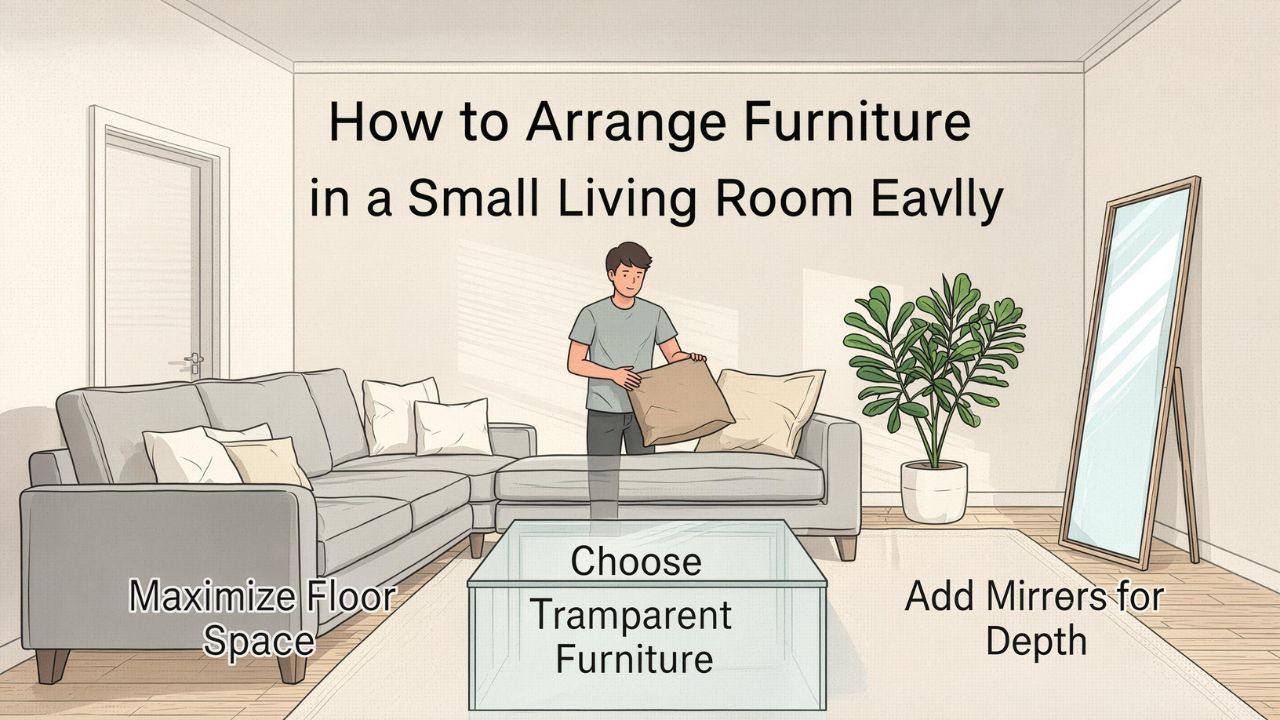
Mirrors instantly make rooms feel larger by reflecting light and creating depth. A large mirror across from a window works especially well.
Choose Furniture With Legs
Leggy furniture allows light to flow underneath, which visually expands the room. Solid skirted furniture can feel heavier and more crowded.
Keep Window Treatments Simple
Heavy drapes can overwhelm compact rooms. Lightweight curtains or minimal blinds allow more natural light into the space.
How to Arrange Furniture in a Small Living Room With a TV
Televisions are often the primary focal point in living rooms, but they can dominate small spaces if not positioned thoughtfully.
Mount the TV on the Wall
Wall-mounted televisions free up valuable floor space and reduce bulky furniture requirements.
Use Slim Media Consoles
Choose narrow entertainment units with storage instead of oversized cabinets.
Avoid Blocking Windows
Natural light helps small rooms feel larger, so avoid placing televisions or tall furniture directly in front of windows whenever possible.
Position Seating Comfortably
The seating arrangement should allow comfortable viewing without forcing awkward neck angles or cramped positioning.

Creating Conversation Areas in Small Rooms
A living room should encourage interaction and comfort.
Keep Seating Close Together
Furniture placed too far apart makes conversations feel disconnected. In smaller rooms, a cozy grouping naturally creates intimacy.
Use Round Tables
Round coffee tables improve movement and soften sharp edges, making compact spaces feel less rigid.
Add Flexible Seating
Poufs, stools, and lightweight chairs can easily move around when guests visit without permanently occupying space.
Define Zones With Rugs
Area rugs help visually organize the room and create a sense of structure without adding physical barriers.
When planning how to arrange furniture in a small living room, creating a comfortable social environment is just as important as maximizing space.
Storage Solutions That Reduce Clutter
Clutter instantly makes small rooms feel even smaller.
Use Vertical Storage
Tall shelving units utilize wall height instead of consuming floor space.
Vertical storage options include:
- Floating shelves
- Ladder shelves
- Wall cabinets
- Mounted baskets
Hide Everyday Items
Storage baskets, ottomans, and furniture with hidden compartments help maintain a cleaner appearance.
Limit Decorative Accessories
Too many decorative objects create visual noise. Focus on fewer, more meaningful pieces for a calmer environment.
Use Furniture With Built-In Storage
Storage benches and coffee tables help combine function and organization in one piece.
Common Layout Mistakes to Avoid
Even stylish furniture can fail if arranged poorly.
Blocking Natural Pathways
Furniture should never interrupt easy movement through the room.
Choosing Oversized Rugs
Rugs that overwhelm the floor area can visually shrink the space. Choose appropriately scaled options.
Ignoring Vertical Space
Small rooms require upward thinking. Bare walls waste valuable storage and design opportunities.
Overdecorating
Minimalism often works best in compact living rooms. Too many colors, textures, or furniture pieces can quickly create clutter.
Avoiding these issues makes it easier to understand how to arrange furniture in a small living room effectively and comfortably.
Layout Ideas for Different Room Shapes
Not all small living rooms share the same shape. The layout should reflect the room’s architecture.
Narrow Living Rooms
In long, narrow rooms:
- Use slim furniture
- Keep pathways open
- Avoid blocking sightlines
- Use mirrors to widen the appearance
Square Living Rooms
Square spaces allow more flexibility. Centering furniture around a rug or coffee table usually works well.
Open-Concept Apartments
Use rugs, lighting, and furniture placement to define the living room area without walls.
Studio Apartments
Studio layouts benefit from multifunctional furniture and visual dividers like open shelving or console tables.
Lighting Tricks That Improve Small Spaces
Lighting dramatically affects how spacious a room feels.
Layer Multiple Light Sources
Instead of relying on one ceiling fixture, combine:
- Floor lamps
- Table lamps
- Wall sconces
- Accent lighting
Layered lighting adds warmth and depth.
Use Warm White Bulbs
Warm lighting creates a cozy atmosphere while maintaining comfort for reading and relaxing.
Let Natural Light Flow
Avoid heavy furniture placement near windows. Natural brightness helps visually expand the room.
Decorating Without Overcrowding
Decor should enhance the room without overwhelming it.
Stick to a Consistent Color Palette
Too many contrasting colors create visual clutter. Neutral foundations with a few accent colors work best.
Use Large Artwork Instead of Many Small Pieces
One oversized art piece often looks cleaner and more sophisticated than several tiny frames.
Add Texture for Warmth
Layering textures through pillows, throws, and rugs creates coziness without needing excessive décor.
Incorporate Plants Thoughtfully
Plants add life and freshness, but oversized planters can crowd small rooms. Choose compact greenery or hanging plants.
Budget-Friendly Ways to Improve Layout
You don’t always need expensive furniture to improve your space.
Rearrange Existing Furniture
Sometimes a new layout alone dramatically changes the room’s feel.
Declutter Aggressively
Removing unnecessary items creates instant visual relief.
Repurpose Furniture
A bench may work as a coffee table, while a console table can double as a workspace.
Use Peel-and-Stick Design Elements
Temporary wallpaper or removable décor updates can add personality without major renovation costs.
Understanding how to arrange furniture in a small living room often requires creativity more than a large decorating budget.
h2 FAQs
h3 What is the best furniture layout for a small living room?
The best layout keeps pathways clear, focuses seating around a central point, and avoids overcrowding the room with unnecessary furniture.
h3 Should furniture touch the walls in a small living room?
Not always. Pulling furniture slightly away from walls can create better flow and make the room feel larger.
h3 How do I make a small living room look bigger?
Use light colors, mirrors, multifunctional furniture, and minimal clutter to create a more open appearance.
h3 What type of sofa works best in compact spaces?
Apartment-size sofas with slim arms and raised legs usually work best in smaller living rooms.
h3 Can I use a sectional in a small living room?
Yes, but choose a compact sectional designed for smaller spaces and avoid oversized configurations.
h3 How much furniture is too much for a small room?
If movement feels restricted or the room appears crowded, there is likely too much furniture. Prioritize function over quantity.
h3 Are glass tables good for small living rooms?
Yes. Glass tables reflect light and create a lighter visual presence, helping rooms feel more spacious.
h3 How do I arrange furniture in a small apartment living room?
Focus on multifunctional furniture, vertical storage, and maintaining clear traffic flow throughout the space.
Conclusion
A smaller living room doesn’t have to feel limiting. With thoughtful planning, smart furniture choices, and a balanced layout, compact spaces can feel stylish, functional, and incredibly comfortable.
Learning how to arrange furniture in a small living room is ultimately about making intentional choices that support your lifestyle while maximizing every available inch. From creating better traffic flow to selecting multifunctional furniture and reducing clutter, small adjustments often produce the biggest transformations.
The goal isn’t simply to fit furniture into a room—it’s to create a space that feels welcoming, practical, and enjoyable every day.