
Most people don’t realize their clutter problem isn’t really about stuff — it’s about decisions that never got made. Every pile on the counter, every box in the garage, every “I’ll deal with it later” item is a deferred choice. And the longer those choices pile up, the more overwhelming the whole thing feels.
This guide breaks down exactly how to declutter your home in a way that actually sticks. You’ll get a clear system, room-by-room strategies, and practical home organization ideas that work whether you’re doing a full overhaul or just trying to reclaim your kitchen counter. No fluff. No overwhelm. Just a real plan.
Why Most People Struggle With Decluttering (And How to Stop)
Before you grab a trash bag and start throwing things out, it helps to understand why decluttering your home feels so hard in the first place.
The research tells an interesting story. A UCLA study on middle-class American families found that the primary caregiver’s stress hormones spiked directly in relation to the number of objects in their home. More stuff, more cortisol. It’s not just a preference — clutter has measurable psychological weight.
The three main reasons people get stuck:
Sunk cost thinking. “I spent good money on that.” The money is already gone. Keeping something you never use doesn’t recover it.
Future-self fantasy. “I might need this someday.” For most items, that day never comes. A good rule: if you haven’t touched something in 12 months and it has no clear future use, it doesn’t earn its square footage.
Emotional attachment. This one’s legitimate and deserves care. The fix isn’t to become ruthless — it’s to get intentional. Keep what genuinely matters. Let go of what you kept out of guilt or inertia.
Once you understand the patterns, the work gets easier.
How to Organize Your Approach Before You Start
Jumping in without a plan is how people end up with everything pulled out of closets and spread across the floor at 11 PM with no energy left to finish. How to organize starts with strategy, not action.
Set a Realistic Scope
Don’t plan to do your entire house in one weekend if you’ve spent years accumulating things. That’s a setup for burnout. Instead, choose a single room or even a single category to start. Finish that. Then move on.
A practical starting point: pick the space that bothers you most every day. For most people, that’s the kitchen or the entryway. A quick win in a high-traffic area pays psychological dividends that keep you going.
Use the Four-Box Method
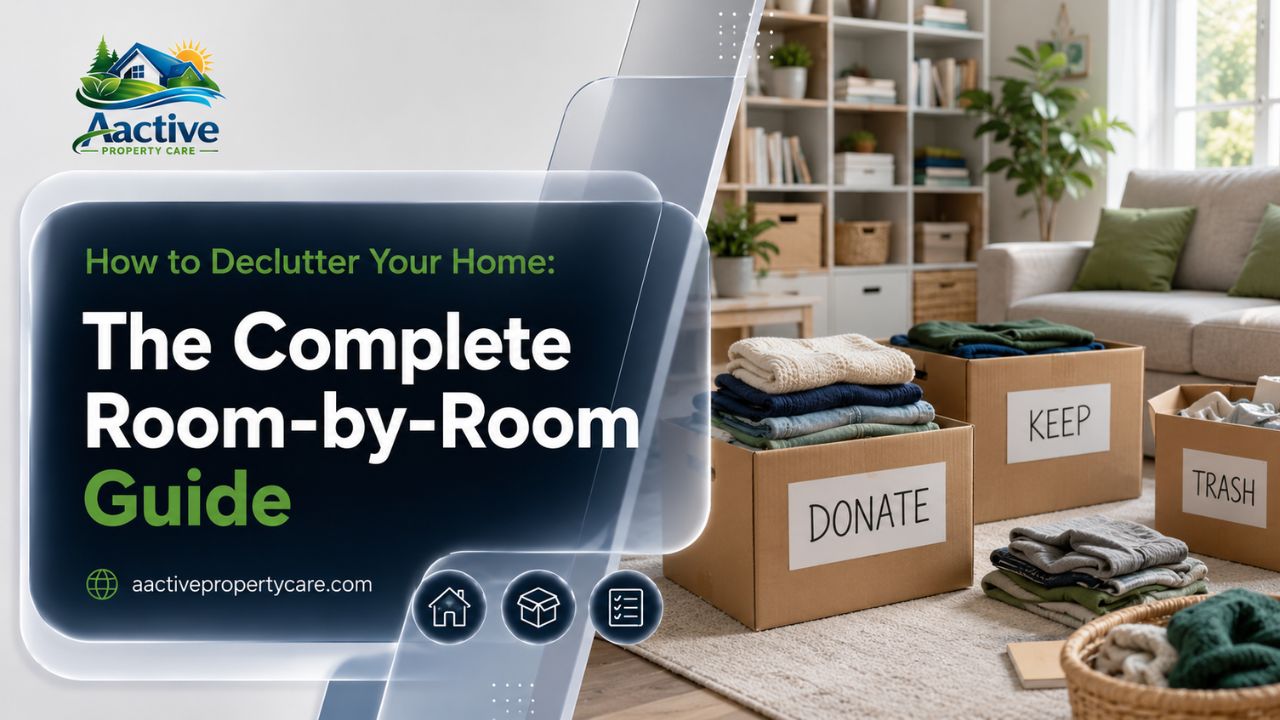
One of the most effective organizing tips for getting started: set up four labeled areas before you touch anything.
- Keep — things you actively use and genuinely need
- Donate/Sell — items in good condition that someone else could use
- Trash/Recycle — broken, expired, or genuinely useless items
- Relocate — things that belong in a different room
This structure prevents the common mistake of “tidying” — moving things from one pile to another without actually making decisions.
Time-Block Your Sessions
Set a timer. Seriously. Two-hour focused sessions beat vague “I’ll work on it all day” intentions. When the timer goes off, you stop — even if you’re mid-shelf. This keeps energy high and prevents the dreaded mid-project crash.
Room-by-Room: How to Declutter Your Home
Kitchen
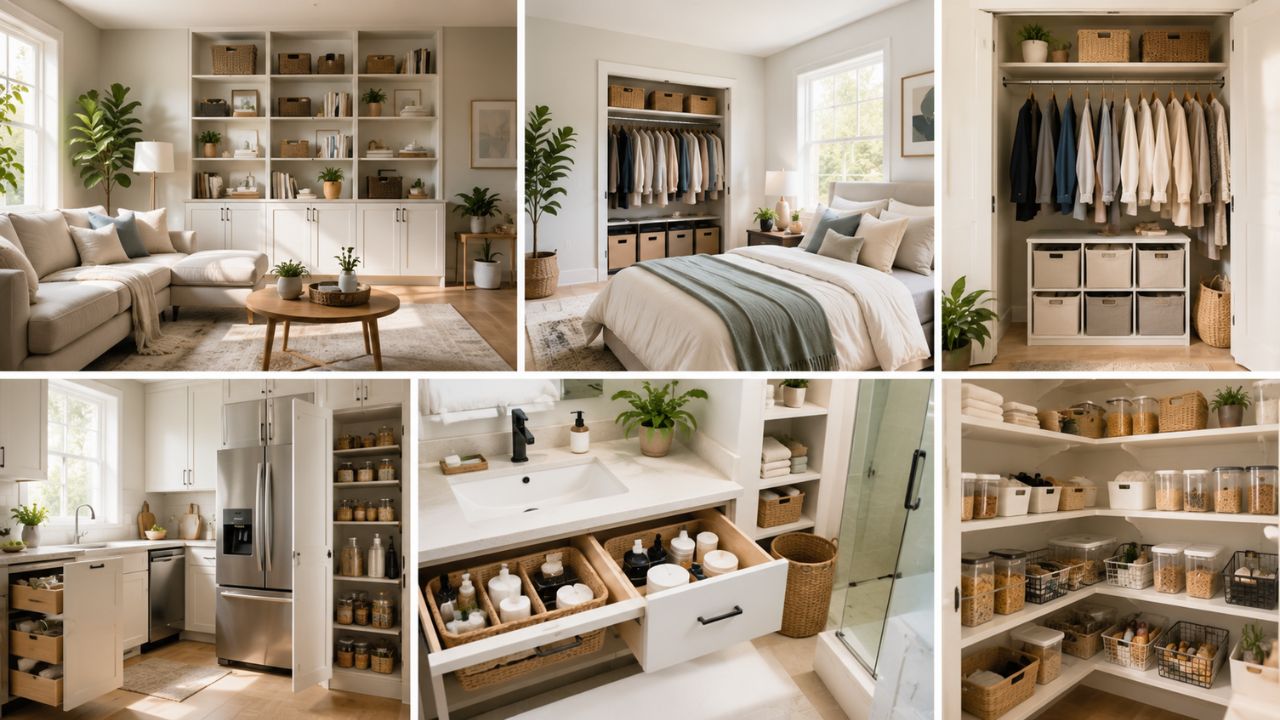
The kitchen is where clutter compounds fast because it involves so many categories — cookware, appliances, food, utensils, cleaning supplies, paperwork that somehow migrated here. Home organization ideas for the kitchen need to address all of it.
Countertops first. Pull everything off. Only put back what you use at least three times a week. The coffee maker? Yes. The bread maker you’ve used twice in four years? Probably not.
Duplicates are the enemy. Most households have far more than they need. You don’t need seven spatulas. You don’t need four sets of measuring cups. Keep the best versions of each item and donate the rest.
Check expiration dates. Go through pantry items, spices, and refrigerator condiments. This is an area where people consistently find years-old items they forgot they had. Clear it out.
Cabinet audit. Open every cabinet and ask: do I use this? Does it work? Do I need this many? Consolidate where you can and get rid of what doesn’t earn a spot.
Bedroom
Your bedroom should be a space for rest. Clutter undermines that — research published in Sleep journal found that people with cluttered bedrooms had more difficulty falling and staying asleep.
When thinking about how to declutter your room, start with the floor and surfaces, then work into closets.
Clothing. The classic approach: if you haven’t worn it in a year, it goes. Be honest about aspirational clothes — items you keep because you hope to wear them someday but haven’t in years. A practical test: if you tried it on today, would you actually wear it out? If not, let it go.
Under the bed. This spot collects things invisibly. Pull everything out. Only store items here that you genuinely need and that are properly organized (not just “shoved under there”).
Nightstand and dresser tops. These surfaces accumulate fast. Clear them to the essentials: what you actually reach for at night and in the morning.
Living Room
Living rooms collect things because everyone passes through them. Books, magazines, remote controls, kids’ toys, charging cables, throw blankets — it adds up.
Good organization tips for this space focus on containment. Every category needs a home. Remotes go in a specific spot. Throw blankets go in a basket or a designated spot on the sofa. Charging cables get corralled into one tidy area.
Books are worth a dedicated moment. If you’re a reader, great — keep your favorites and the ones you genuinely plan to read. But most households have books kept out of guilt (gifts, classics you “should” read, textbooks from college). A library that’s curated to what you actually love is worth more than one that’s stuffed.
Bathroom
Bathrooms are usually smaller than other rooms but can pack in an impressive amount of clutter — expired medications, half-used products, duplicates, things you bought and never used.
Medicine cabinet and under-sink areas. Go through everything. Dispose of expired medications properly (many pharmacies have take-back programs). Consolidate products. Toss anything you haven’t used in six months.
The product audit. How many shampoos, conditioners, body washes, and face products are open right now? Finish one before opening another. This single habit prevents a huge amount of bathroom accumulation.
Home Office
The home office organization ideas that actually work are the ones that match how you actually work — not some aspirational version of yourself that has perfectly color-coded files.
How to organize an office starts with the paper problem. Paper is usually the biggest culprit. Go through everything and separate into: action needed, file, and shred/recycle. Then actually follow through.
How to organize your home office effectively means thinking about workflow. What do you reach for constantly? That goes within arm’s reach. What do you need weekly? In a drawer. What’s reference material? On a shelf or in a filing system. What do you never use? Out.
Home office organization tips for the desk itself: clear surfaces help you think. Keep only what you’re actively working on visible. Everything else gets filed or stored.
Organizing an office also means dealing with the tech pile — old cables, chargers for devices you no longer own, outdated equipment. These things take up space and create visual noise. Audit them honestly.
How to Organize Your Life Beyond the Physical Stuff
Decluttering isn’t only about physical objects. When people say “I need help cleaning and organizing my house,” what they often mean is they need a system — not just a one-time clear-out.
A decluttered home stays that way when systems replace habits of accumulation.
The One-In, One-Out Rule
For every new item that comes into your home, one comparable item goes out. Buy new shoes? Donate an old pair. Get a new kitchen gadget? Decide which one it replaces.
This isn’t restrictive — it’s just honest accounting of space.
Designate a “Landing Zone”
Most clutter originates at the entry point. Bags get dropped, mail gets tossed, keys land wherever. A simple landing zone — hooks for bags and keys, a tray for mail, a shelf for shoes — catches things before they migrate and multiply.
The 10-Minute Reset
A daily 10-minute tidy keeps things from building up. This isn’t deep cleaning — it’s resetting surfaces, returning things to their homes, and handling the small decisions before they become piles.
This habit alone is one of the most powerful home organization tips for maintaining what you’ve created.
How to Stay Organized: The Habits That Actually Stick
Getting organized is the first challenge. How to stay organized is the second — and for many people, the harder one.
Here’s what the research and real-world experience shows:
Systems beat willpower. Don’t rely on motivation to keep things tidy. Design your space so the easiest thing to do is put things away properly. Give everything a home that makes sense for how you actually use it.
Friction is your friend. If clutter tends to collect on a specific surface, make it harder for things to land there. Put something intentional in that spot. Remove the path of least resistance.
Seasonal reviews. Four times a year, do a quick walk-through of each room and reassess. Things that are no longer used get moved out. This prevents the slow creep of re-accumulation.
Involve your household. If you live with other people, a decluttered home requires buy-in from everyone. It doesn’t need to be a formal meeting — it just needs to be a shared understanding that every person is responsible for their own areas.
How to Organize Your Home Office: A Deeper Dive
Since so many people now work from home full or part-time, how to organize home office spaces deserves special attention. A disorganized workspace doesn’t just feel bad — it costs you time and cognitive energy.
The Desk Setup
Your desk should have only three zones:
- Active zone: What you’re working on right now
- Reference zone: What you need regularly (within arm’s reach)
- Storage zone: Everything else, out of sight
Home office organization tips from productivity research consistently point to one thing: visual clutter competes for cognitive resources. A clear desk literally helps you think more clearly.
Filing System
Go digital where you can. Scan and store documents you need to keep but don’t need physical copies of. For what remains physical, a simple alphabetical system beats an elaborate color-coded structure you’ll never maintain.
Cable Management
This is a small thing with an outsized effect on how your office feels. Cable clips, velcro ties, or a cable management box under the desk takes about 20 minutes and makes the space feel 10x more organized.
Quick-Start Guide: How to Get Organized This Weekend
If you want to make real progress fast, here’s a weekend plan for how to get organized without burning out:
Saturday morning (2 hours): Kitchen declutter. Countertops, pantry, one set of cabinets.
Saturday afternoon (2 hours): Living room reset. Surfaces, bookshelves, the miscellaneous pile.
Sunday morning (2 hours): Bedroom closet. Clothing only — this is usually the biggest payoff.
Sunday afternoon (1 hour): Set up systems. Designate homes for recurring clutter spots. Create your landing zone.
That’s 7 hours of focused work. Most people who do this come out the other side shocked at how different their home feels — and how much mental space opens up.
Decluttering vs. Organizing: Know the Difference
A critical point that gets missed: declutter your home before you organize it. Not the other way around.
Buying storage bins and organizers before you’ve reduced what you own is one of the most common mistakes people make. You end up organizing things you don’t need. You make trips to The Container Store for solutions to a problem you haven’t actually solved.
The sequence matters:
- Declutter — remove what doesn’t belong
- Organize — find smart homes for what’s left
- Maintain — build habits that keep it that way
Skip step one and step two will never stick.
Comparison: Popular Decluttering Methods
| Method | Best For | Core Principle | Time Commitment |
|---|---|---|---|
| KonMari (Marie Kondo) | Whole-home transformation | Keep only what “sparks joy” | High (category-based) |
| Four-Box Method | Any room, any level | Decide: keep, donate, trash, relocate | Low-Medium |
| Swedish Death Cleaning | Older adults, downsizing | Would someone else want this? | Medium-High |
| One-Room-at-a-Time | Overwhelmed beginners | Small wins build momentum | Low per session |
| Minimalism approach | Long-term lifestyle shift | Own only what serves a purpose | Ongoing |
No single method is best for everyone. The right approach is the one you’ll actually follow through on.
Frequently Asked Questions
How do I start when I don’t know where to begin with decluttering? Start with the space that bothers you most every day — usually the kitchen or bedroom. Spend two hours with the four-box method and make real decisions. Don’t try to do everything at once.
How long does it take to declutter a whole house? For an average three-bedroom home, most people need between 20–40 hours of focused work spread over several weeks. Trying to compress this creates burnout. Consistent sessions over time work better than marathon efforts.
What should I do with items I want to donate or sell? Bag donations immediately and put them in your car the same day — otherwise they stay in limbo. For selling, list items within 48 hours of deciding to sell or donate them instead. The longer they sit, the more likely they are to creep back into the house.
How do I declutter without getting overwhelmed? Work in categories or rooms, not the whole house at once. Set a timer. Limit sessions to two hours. Celebrate small wins. The momentum builds on itself.
What’s the best way to organize a home office? Clear the desk completely, then only put back what you use daily. Set up a simple filing system for paper. Deal with cables. Keep only one project visible on the desk at a time. A simple setup outperforms a complex one every time.
How do I get my family to help with home organization? Make it a shared project, not a directive. Involve everyone in decisions about communal spaces. Give each person ownership of their own areas. Frame it around the benefit — more space, less stress — not the problem.
What are the best home organization products worth buying? After decluttering, a few genuinely useful items: drawer dividers for kitchens and bathrooms, a simple filing system for paper, hooks and a tray for an entryway landing zone, storage ottomans for living room items, matching hangers for closets (this alone makes a huge difference visually).
How do I stay motivated to keep my home organized? Take before-and-after photos. The contrast is a powerful reminder of why it matters. Also — notice how you feel in the organized spaces. That feeling is the real motivation. Systems and habits matter more than motivation for the long term, though.