
Introduction
A young cherry tree can look almost delicate in its first season, yet a few years later it often becomes the most noticed part of a garden. That transformation is exactly why so many gardeners ask how fast do cherry trees grow before planting one. Growth speed affects everything—where you plant it, how soon shade appears, when fruit arrives, and how much pruning you will eventually need.
The answer is not as simple as one number because cherry trees behave differently depending on variety, climate, rootstock, and early care. Some ornamental trees surprise people by adding visible height within a single season, while fruiting varieties may focus first on root strength before showing dramatic vertical growth.
For many gardeners, the first two years feel slow. Then suddenly, one spring arrives and branches stretch farther than expected. That shift often happens because roots have finally settled deeply enough to support stronger top growth.

Table of Contents
Understanding How Fast Do Cherry Trees Grow in Different Conditions
Average Annual Growth Rate of Cherry Trees
What Controls Cherry Tree Growth Speed
Fruit Production Timeline for Cherry Trees
Soil, Water, and Sunlight Effects
Pruning and Long-Term Shape Development
Common Growth Problems in Young Cherry Trees
FAQ
Conclusion
Understanding How Fast Do Cherry Trees Grow in Different Conditions
Growth Depends First on Tree Type

When people ask how fast do cherry trees grow, the first detail that matters is whether the tree is ornamental or fruiting.
Ornamental cherry trees are often planted mainly for blossom display. Fruiting trees, by contrast, balance structural growth with future fruit production.
Improveville.org shares simple health, wellness, fitness, nutrition, skincare, and lifestyle tips to help readers make better daily choices for a healthier life.
Ornamental and Fruiting Trees Behave Differently
Common differences:
- Ornamental trees often prioritize canopy shape
- Fruiting trees often strengthen branch structure first
- Dwarf varieties remain controlled
- Standard trees expand more dramatically
Rootstock Changes Everything

A tree grafted onto dwarf rootstock may grow far slower than a standard-rootstock tree even if both are the same cherry variety.
| Tree Type | Average Annual Growth |
|---|---|
| Dwarf cherry tree | 1–2 feet per year |
| Semi-dwarf cherry tree | 2–3 feet per year |
| Standard cherry tree | 2–4 feet per year |
Average Annual Growth Rate of Cherry Trees
Typical First-Year Expectations
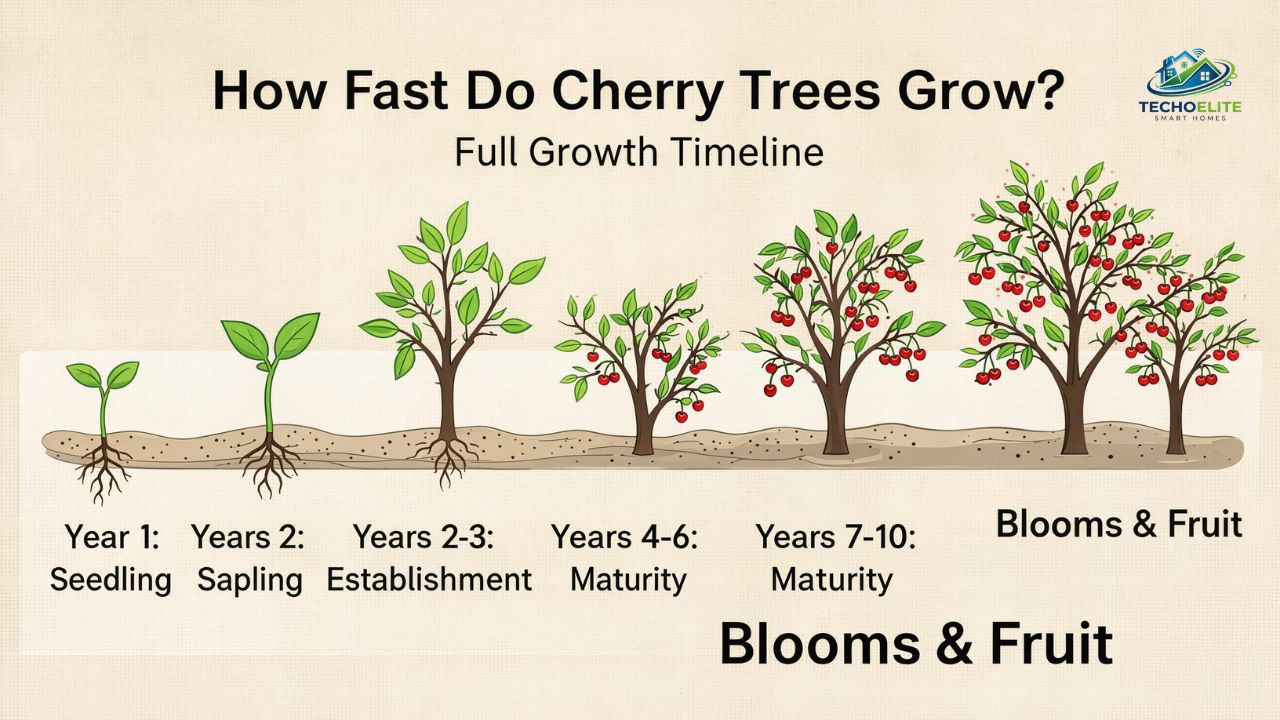
The first year usually focuses heavily on root establishment.
A newly planted tree may appear quiet above ground while roots spread actively below.
Second and Third Year Acceleration
This is when many gardeners suddenly notice visible growth.
A healthy tree often begins stronger branch extension during this period.
Mature Growth Slows Naturally
After several years, height increase becomes more controlled because the tree begins investing energy into branch density, flowering, and fruit systems.

How Fast Do Cherry Trees Grow Compared With Other Fruit Trees
Cherry trees often grow faster than some apple varieties during early years but may remain slightly less aggressive than peach trees in warm climates.
What Controls Cherry Tree Growth Speed
Sunlight Is Non-Negotiable
Cherry trees perform best in full sun.
Ideal exposure:
- 6 to 8 hours daily minimum
Soil Drainage Directly Affects Growth
Poor drainage slows root oxygen exchange.
Signs of soil problems:
- Yellowing leaves
- Weak shoots
- Delayed spring response
Temperature Shapes Seasonal Energy
Cold winters help dormancy cycles, while strong spring warmth encourages active growth.
Nutrition Must Be Balanced
Too much fertilizer often creates soft growth that weakens branch quality.
Fruit Production Timeline for Cherry Trees

Growth Does Not Mean Immediate Fruit
One common misunderstanding is assuming quick height means quick fruit.
Fruiting Usually Begins Later
Typical timelines:
| Cherry Type | First Fruit |
|---|---|
| Dwarf | 3–4 years |
| Semi-dwarf | 4–5 years |
| Standard | 5–7 years |
Blossoms Often Appear Before Reliable Fruit
Early blossoms do not always mean stable fruit production.
Why Patience Matters
A tree that fruits too heavily too early can weaken future structure.

Soil, Water, and Sunlight Effects
Watering Young Trees Correctly
Deep watering works better than frequent shallow watering.
Mulch Helps More Than Many Expect
Mulch improves:
- Moisture stability
- Root temperature balance
- Weed reduction
However, Mulch Must Not Touch the Trunk
Direct trunk contact encourages rot.
Summer Stress Slows Growth Quickly
Hot dry weeks can pause active extension.
Pruning and Long-Term Shape Development
Early Pruning Builds Future Strength
Young cherry trees benefit from structural guidance.
Remove Weak Angles Early
Good branch spacing improves future fruit support.
Avoid Heavy Pruning During Wet Periods
This reduces disease risk.
Why Shape Matters Long-Term
A well-shaped tree handles fruit load better.
Common Growth Problems in Young Cherry Trees

Leaf Curl and Weak Shoots
Often linked to stress or nutrient imbalance.
Slow Growth After Planting
Usually caused by transplant adjustment.
Cracked Bark in Young Trees
This may appear after sudden weather changes.
When Slow Growth Is Actually Normal
Sometimes healthy root work is happening unseen.
FAQ
How fast do cherry trees grow in the first year?
Usually 1 to 3 feet depending on variety and conditions.
Do dwarf cherry trees grow slower?
Yes, they usually remain more compact.
Can cherry trees grow quickly in poor soil?
No, poor drainage and low nutrition slow development.
How long before a cherry tree gives fruit?
Usually 3 to 7 years depending on rootstock.
Does pruning speed up growth?
Correct pruning improves structure but does not force faster height.
Do ornamental cherry trees grow faster than fruit trees?
Sometimes they establish visible canopy faster.
Why does my cherry tree look slow after planting?
First-year root establishment often limits visible top growth.
Is fertilizer necessary every year?
Only balanced feeding is recommended.
Conclusion
The reason gardeners keep asking how fast do cherry trees grow is that cherry trees teach patience in a very visible way. Some seasons feel quiet, almost disappointing, and then suddenly a healthy tree stretches upward with surprising confidence once roots settle deeply enough.
In the long run, steady growth matters more than rapid growth. A cherry tree that develops balanced roots, strong branch angles, and healthy seasonal rhythm usually rewards patience far better than one pushed too hard too early 🌸🌳🍒